Penguin Species Profile
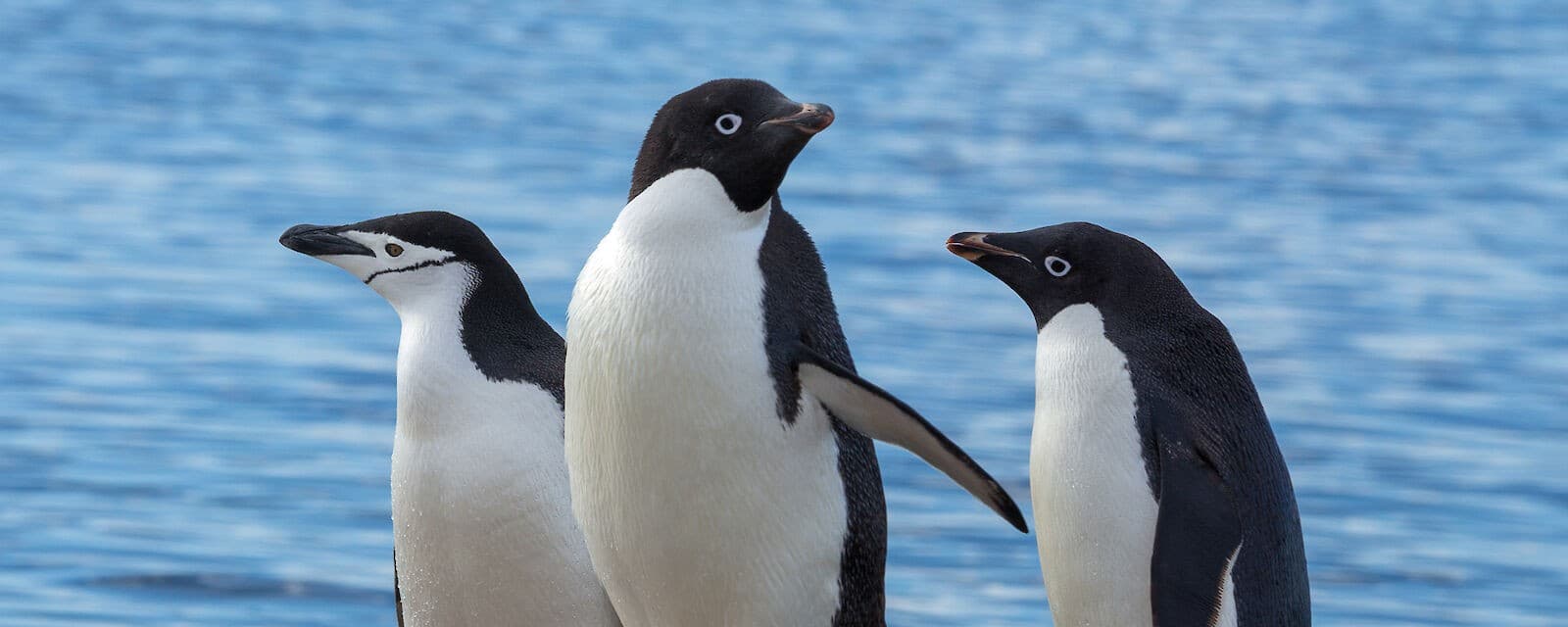
Chinstrap Penguin
Pygoscelis antarctica
An energetic Antarctic penguin well known for its black band under its chin and its 'micronaps'.

Conservation Status
Least Concern

Population Trend
Decreasing
Species Facts
Essential profile data
Scientific name
Pygoscelis antarctica
Name origin
Chinstrap penguins have been named by the black line that runs under their faces
Estimated population
4-7.5M breeding pairs
Colony size
>100,000 pairs
Average lifespan
15-20 years
Weight range
3.5-5.5kg
Maximum height
76cm
Diet
Mostly krill, and sometimes fish
Predators
Leopard seals, orcas, brown skuas, south polar skuas, southern giant petrels
Adaptations
Excellent underwater vision, barbed tongue to hold slippery prey and stiff flippers to propel them through the water
Geographic breeding range
Western Antarctic Peninsula; Bouvet Island; South Georgia Island, South Sandwich Islands; South Orkney Islands
Appearance
Chick and adult comparison
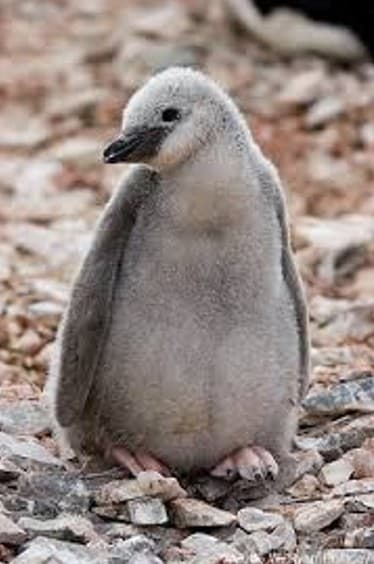
Chick Appearance
Very light grey (silver) feathers on the head and backside, grey flippers, black beak, black eyes, and feet that are a very pale pink or orange. Under the beak and the belly have white plumage. As they age, adult feathers will start growing underneath, resulting to chick feathers falling off. The chinstrap line shows once the penguin has fully grown into an adult and all facial chick feathers have fallen off.
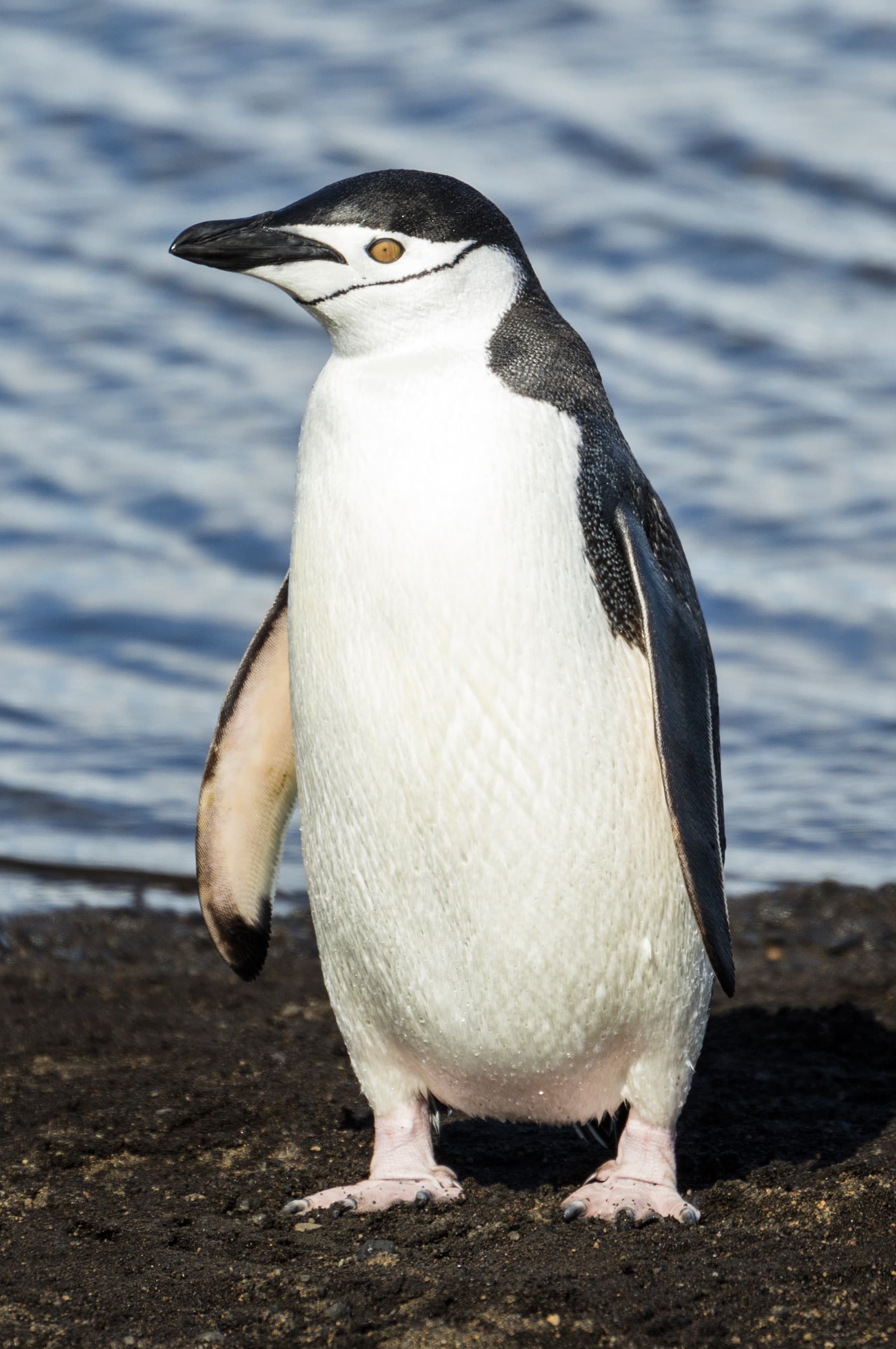
Adult Appearance
Black plumage on the head, flippers, tail and backside, with white plumage on the face and belly. The beak is also black, with brown eyes on each side of it. The chinstrap line is very distinctive under the beak and above the neck fold. By now, the feet are a slightly darker orange or pink than they were at birth.
Fun Fact
Chinstrap penguins take multiple ‘micro-naps’ a day (often lasting around 4 seconds) to ensure they have enough energy to be watchful of their eggs and constantly aware of predators when they are out at sea hunting.