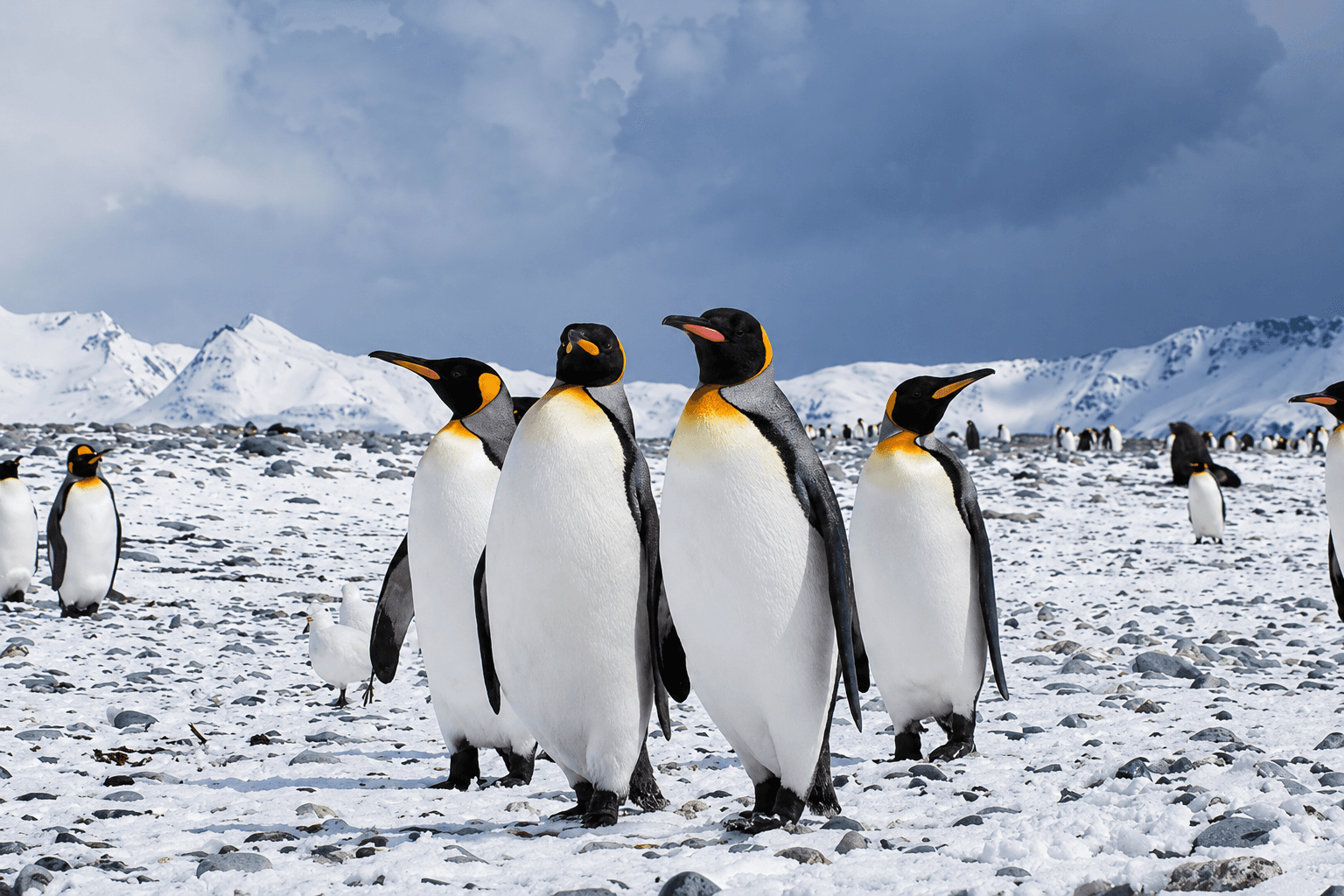
Penguin Species Profile
King Penguin
Aptenodytes patagonicus
Known for its large size and distinctive yellow beak and neck. It is a popular tourist attraction on South Georgia Island

Conservation Status
Least Concern

Population Trend
Increasing
Species Facts
Essential profile data
Scientific name
Aptenodytes patagonicus
Name origin
Upon initial human discovery, these penguins were seen as the largest of all species.
Estimated population
2.23 MIL breeding pairs
Colony size
10,000-100,000 breeding pairs
Average lifespan
15-20 years
Weight range
11-16kg
Maximum height
100cm
Diet
Lanternfish and cephalopods (particularly squid)
Predators
Orcas, Leopard Seals, occasionally fur seals or sea lions, giant petrels, skuas and snowy sheathbills.
Adaptations
Four layers of waterproof, oil coated feathers for insulation.
Geographic breeding range
South Georgia Island, Argentina, Chile, Crozet Islands, Falkland Islands, Kerguelen islands, Heard Island, South Sandwich Islands.
Appearance
Chick and adult comparison
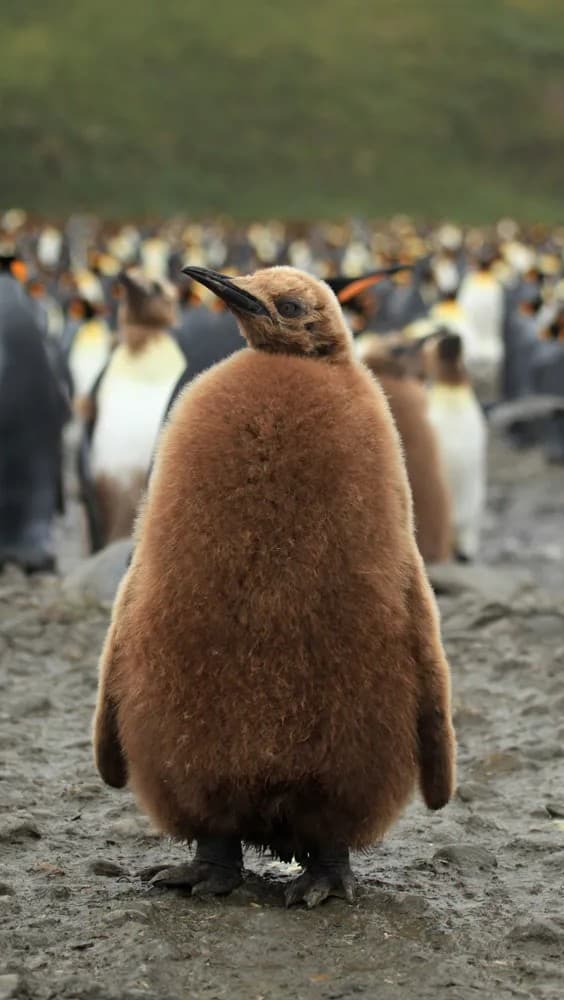
Chick Appearance
Fluffy brown plumage covering the whole body, with black beaks, black feet and brown eyes.
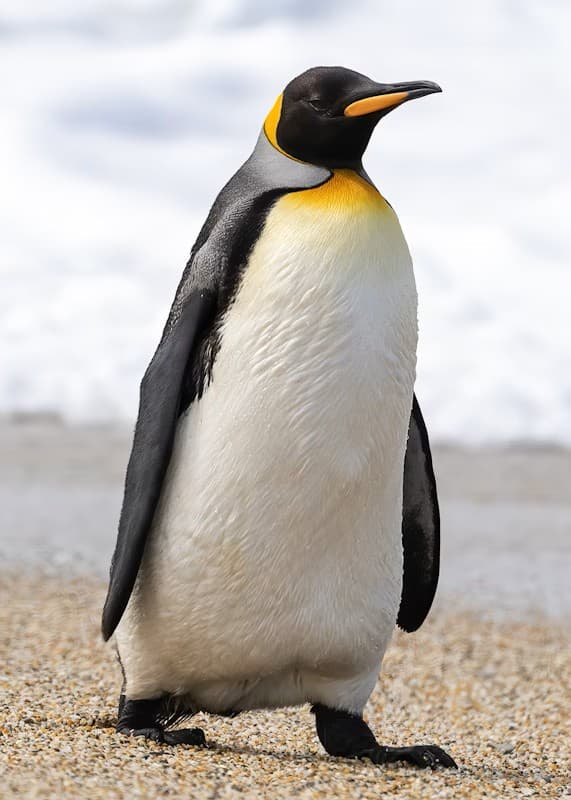
Adult Appearance
Black plumage on the face, flippers backside, with grey plumage on sides of neck, and white plumage on the belly. Dark yellow plumage blends in with white plumage on neck, connecting to belly. Their feet are also black. Their black beaks have a salient orange strike on them. Eyes are brown.
An Interesting Story
Some day in the late 1980s (date unspecified), a king penguin was found in a fishing net with an injured beak and wing. He was given the name ‘Lala.’ A fisherman discovered this and kept him on the boat to take him to Japanese shore. He gave the penguin to the Nishimoto family, who treated his injuries and nursed him back to health. However, Lala never left them after being treated, so the Nishimoto family had a frozen room built for him to live in under their house. He became famous by walking to the fish market with a backpack almost every day and bringing fish to his loving owners. He was featured in some documentaries. He lived a fulfilling and healthy life with the Nishimoto family until he passed away in 1998 (Some records say 1996) due to old age/natural causes.
Fun Fact
King penguins do not build nests for their eggs! Instead, they carry their eggs on their feet, protected by a flap of skin (brood pouch) for warmth.