Penguin Species Profile
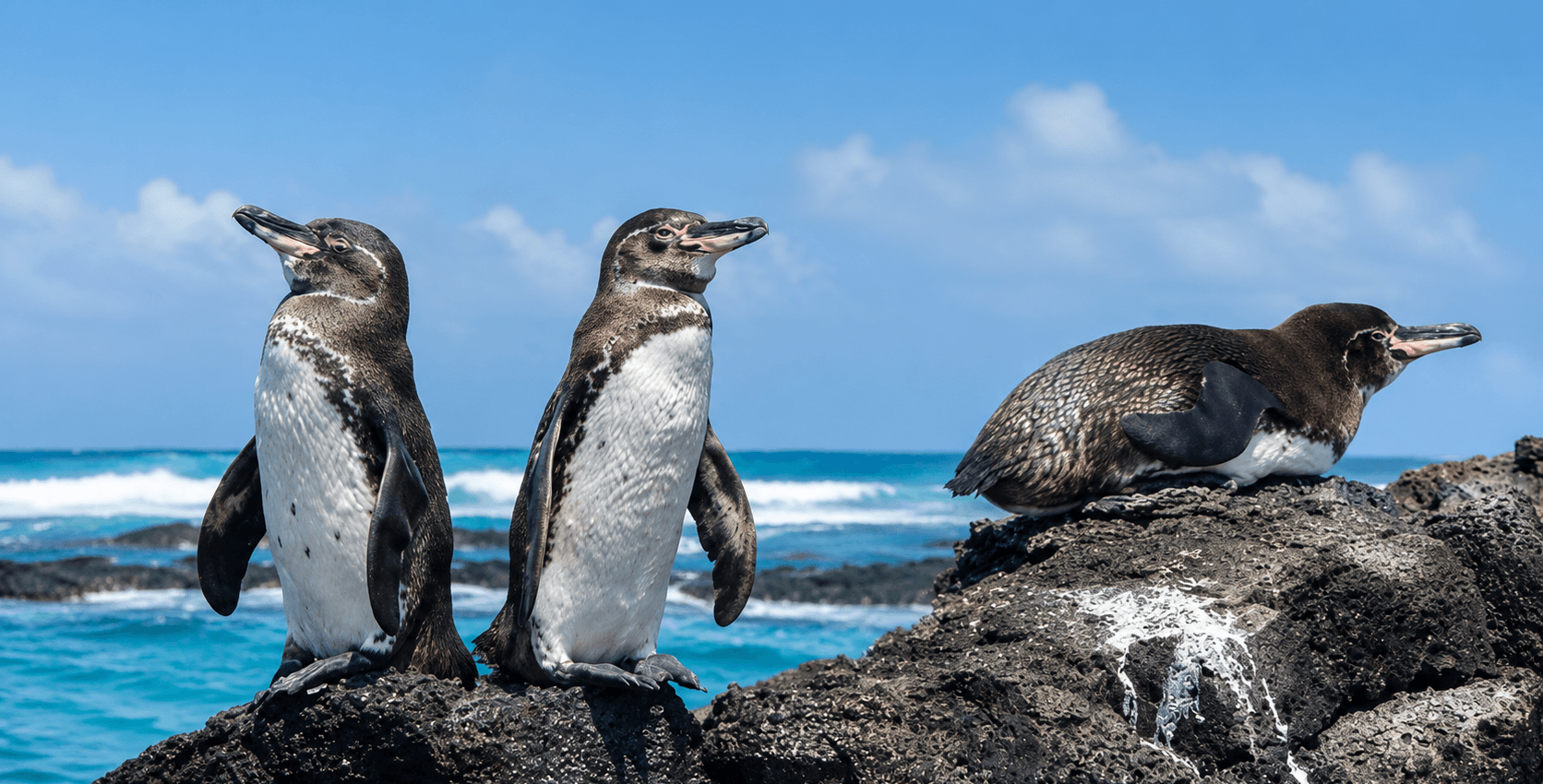
Galapagos Penguin
Spheniscus mendiculus
A penguin that is unique to the Northern Hemisphere and highly adapted to a much warmer climate

Conservation Status
Endangered

Population Trend
Decreasing
Species Facts
Essential profile data
Scientific name
Spheniscus mendiculus
Name origin
Galapagos penguins are situated on the Galapagos Islands of Ecuador
Estimated population
600 breeding pairs
Colony size
Undefined (very small)
Average lifespan
10-20 years
Weight range
1.7-2.6kg
Maximum height
53cm
Diet
Sardines, anchovies and mullets
Predators
Sharks, Galapagos sea lions and fur seals
Adaptations
Holding their flippers out from their bodies and panting to release body heat.
Geographic breeding range
Galapagos islands
Appearance
Chick and adult comparison
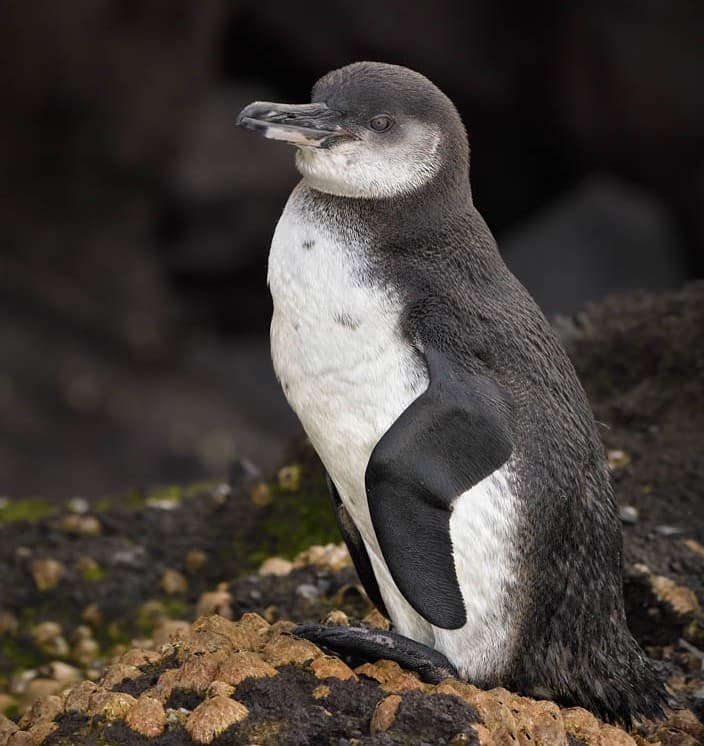
Chick Appearance
Black plumage on the top of the head, backside of the body and backside and inside of flippers, blending into white plumage on the bottom half of the face and on the belly. Eyes are brown. Beak and feet are white.
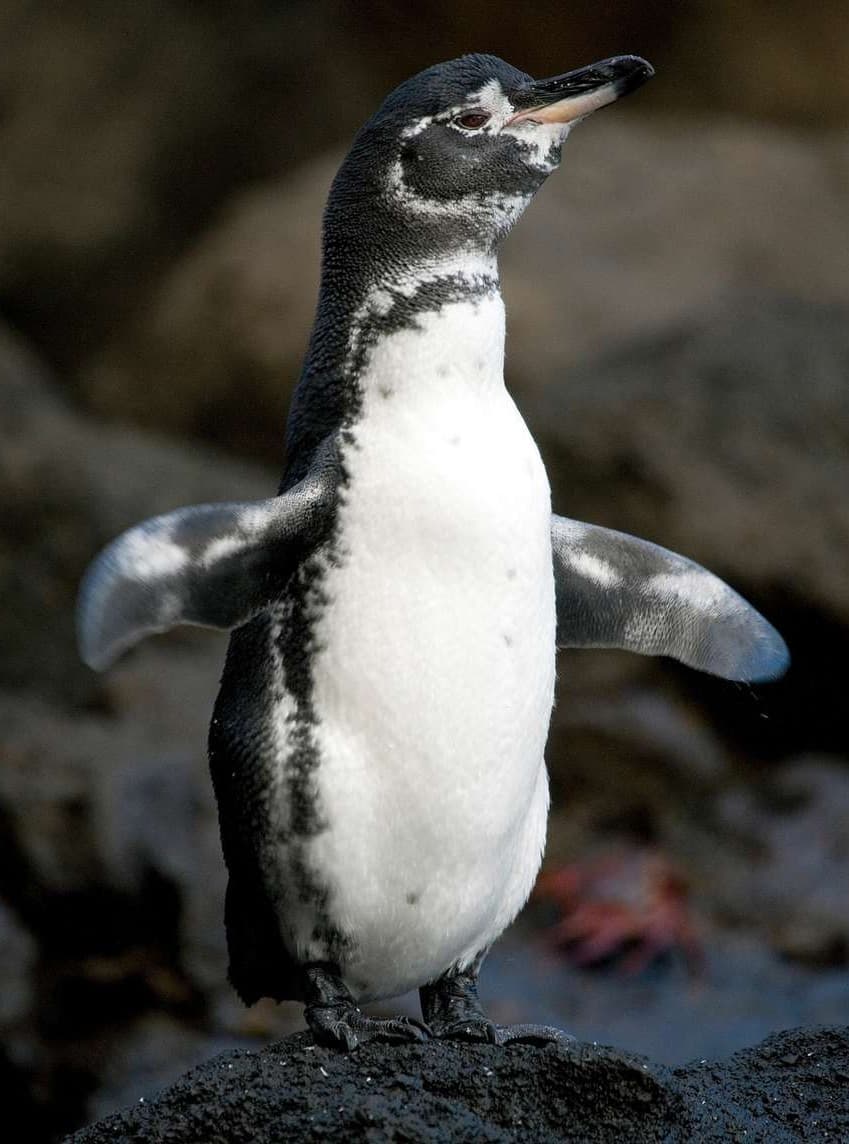
Adult Appearance
Black plumage on the top of the head, backside of the body and backside and inside of flippers, with white plumage on the belly. Crescent shapes of white plumage are visible on the face, going down from the side of the eye to the neck, with patches of white on the neck leading to the breast. Eyes are brown and feet are black. Top half of the beak is black, while bottom half is pink.
Fun Fact
Galapagos penguins are the only penguin species to be found in the Northern Hemisphere! They are the least noisy of all penguin species.