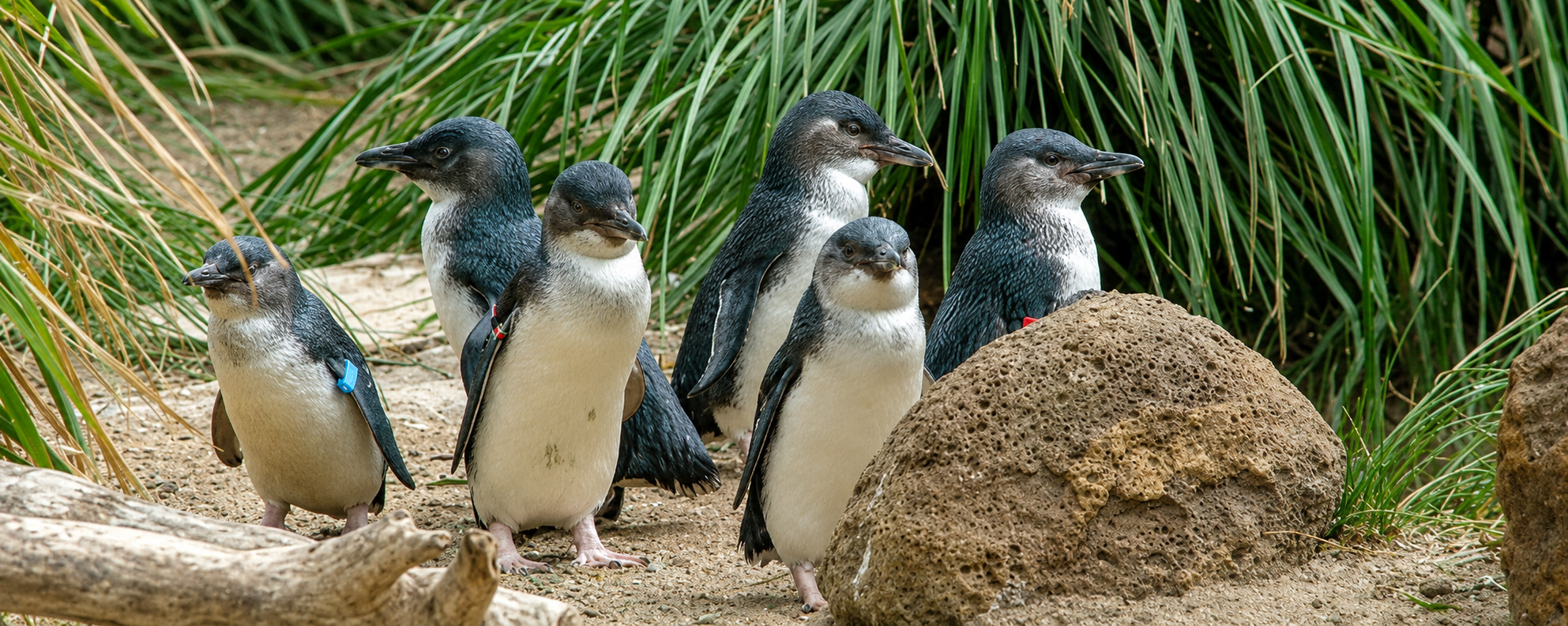
Penguin Species Profile
Little Penguin
Eudyptula minor
Well known for its small size, blue colour, and Australian habitat

Conservation Status
Least Concern

Population Trend
Stable
Species Facts
Essential profile data
Scientific name
Eudyptula minor
Name origin
They are referred to as ‘little’ due to their small size. Some of their other names include ‘fairy’ and ‘blue’ penguins.
Estimated population
470,000-500,000 breeding pairs
Colony size
20-70,000 breeding pairs
Average lifespan
6-10 years
Weight range
1-1.2kg
Maximum height
33cm
Diet
Anchovies, pilchards, whitebait and squid
Predators
Seals, sharks, orcas, sea eagles and introduced predators like foxes, dogs, cats and rats on land.
Adaptations
Tongue bristles to prevent slippery prey from escaping, sharp claws to dig burrows in sand or soil to protect themselves and their chicks.
Geographic breeding range
Southern Australian coast, New Zealand coast and Chatham islands.
Appearance
Chick and adult comparison
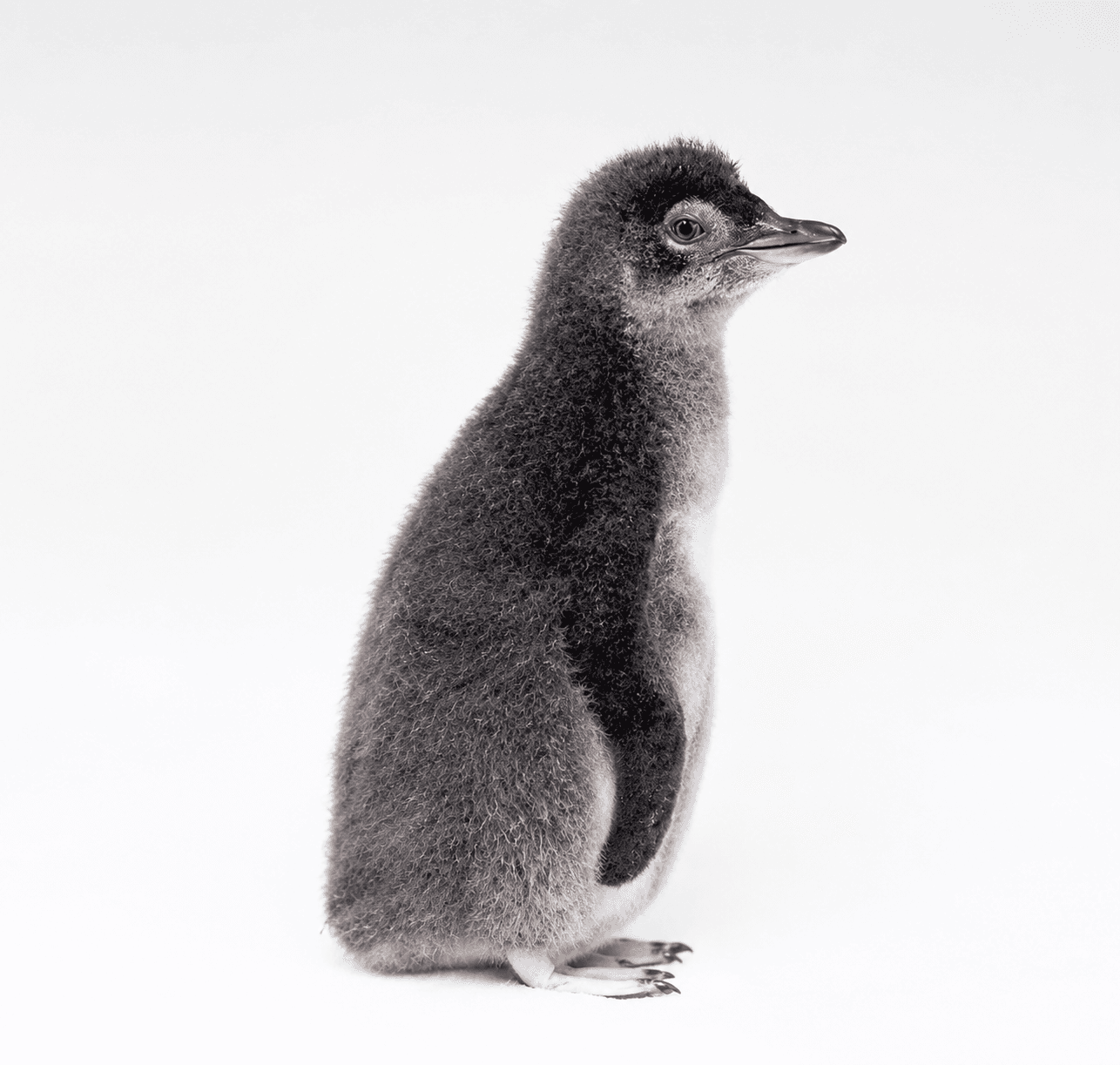
Chick Appearance
Fine blackish-grey or brown plumage on the head, backside and outside of the flippers, with white plumage on the belly and inside of the flippers. Beak is dark greyish-black and feet are a very pale pink.
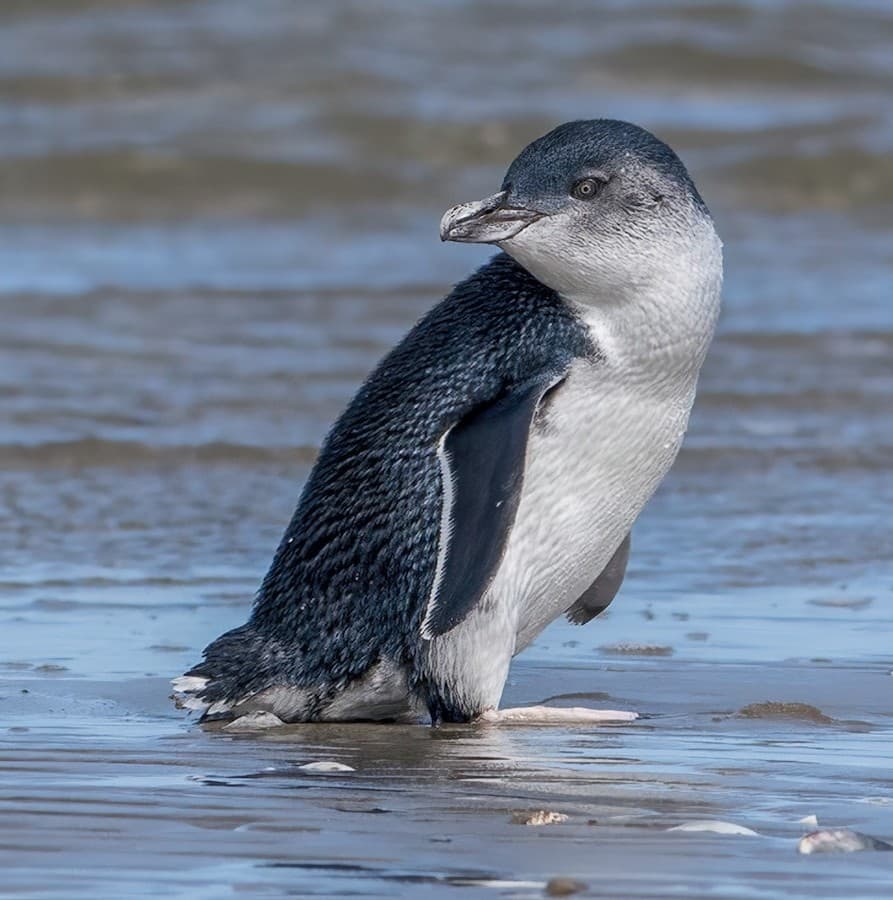
Adult Appearance
Oily, dense, waterproof dark blueish-grey plumage on the backside, head and outside of the flippers, with white plumage on the belly, neck and inside of the flippers. Eyes are grey with a big black pupil in the middle, beak is dark greyish-black and feet are pale pink with black soles.
Fun Fact
Little penguins are the world’s smallest penguin! They secrete an oily substance from their tails to their body feathers to maintain their body temperature, and have salt glands in their eyes to filter salt from the seawater and their prey, so they can stay hydrated.