Penguin Species Profile
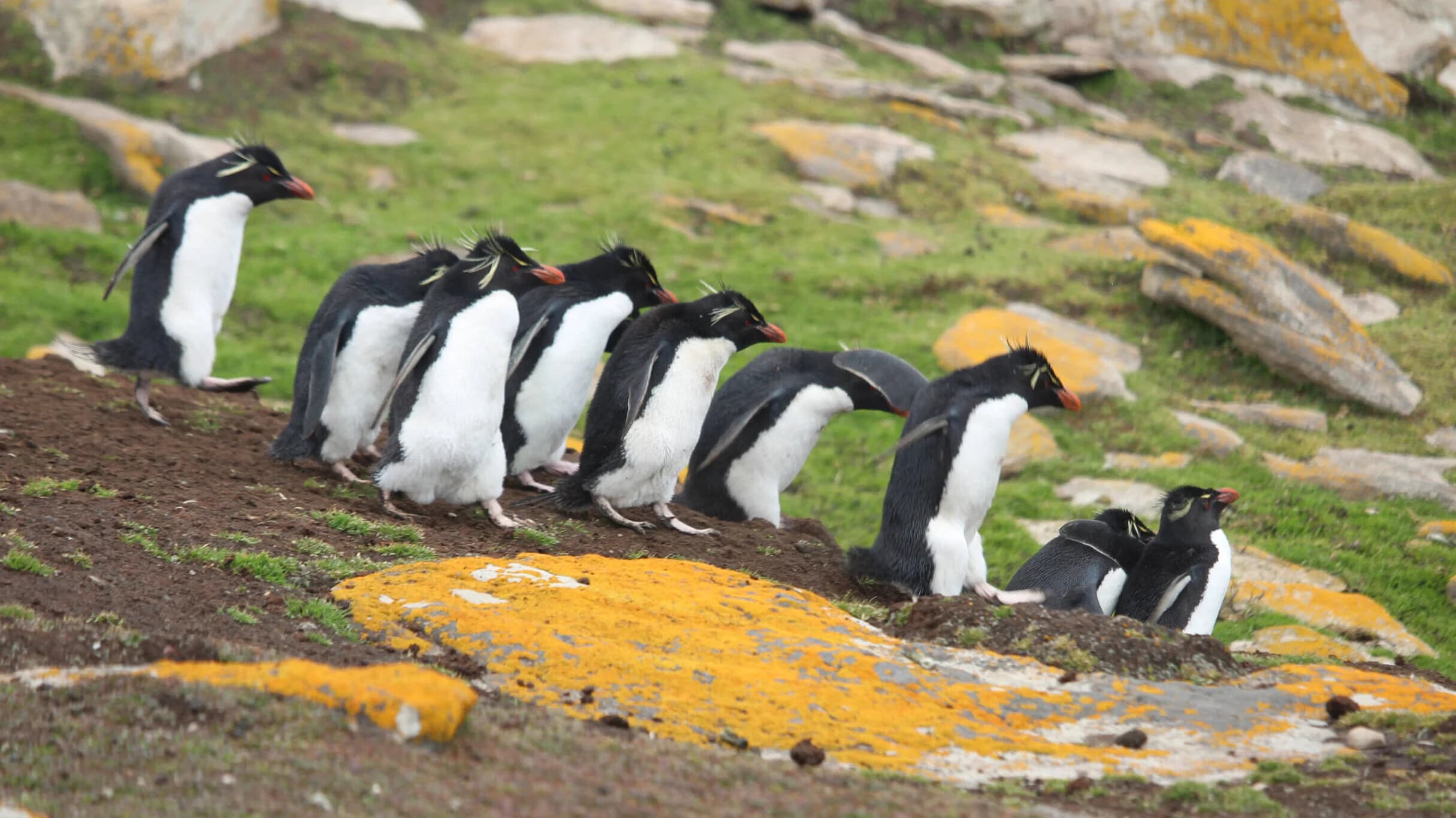
Southern Rockhopper Penguin
Eudyptes chyrosocome
A lively crested penguin known for hopping across the rocky shores of the subantarctic.

Conservation Status
Vulnerable

Population Trend
Decreasing
Species Facts
Essential profile data
Scientific name
Eudyptes chyrosocome
Name origin
Named due to its unique behaviour of hopping over rocks, like the northern rockhopper penguin, however it lives more down south
Estimated population
1.2-1.5M breeding pairs
Colony size
100-100,000 breeding pairs
Average lifespan
10-15 years
Weight range
2-3.8kg
Maximum height
58cm
Diet
Crustaceans, fish, small squid and other cephalopods
Predators
Leopard seals, fur seals, sea lions, orcas, sharks, brown skuas, giant petrels, gulls, sheathbills and striated caracaras
Adaptations
Bright yellow crests that look like eyebrow stripes and spiky black feathers help signal aggression, recognition of mates, and communication during breeding
Geographic breeding range
Argentina, Australian sub-Antarctic islands, Chile, Crozet Islands, Falkland Islands, Heard Island, McDonald Islands, Kerguelen Islands, New Zealand sub-Antarctic islands, Marion Island and Prince Edward Islands
Appearance
Chick and adult comparison
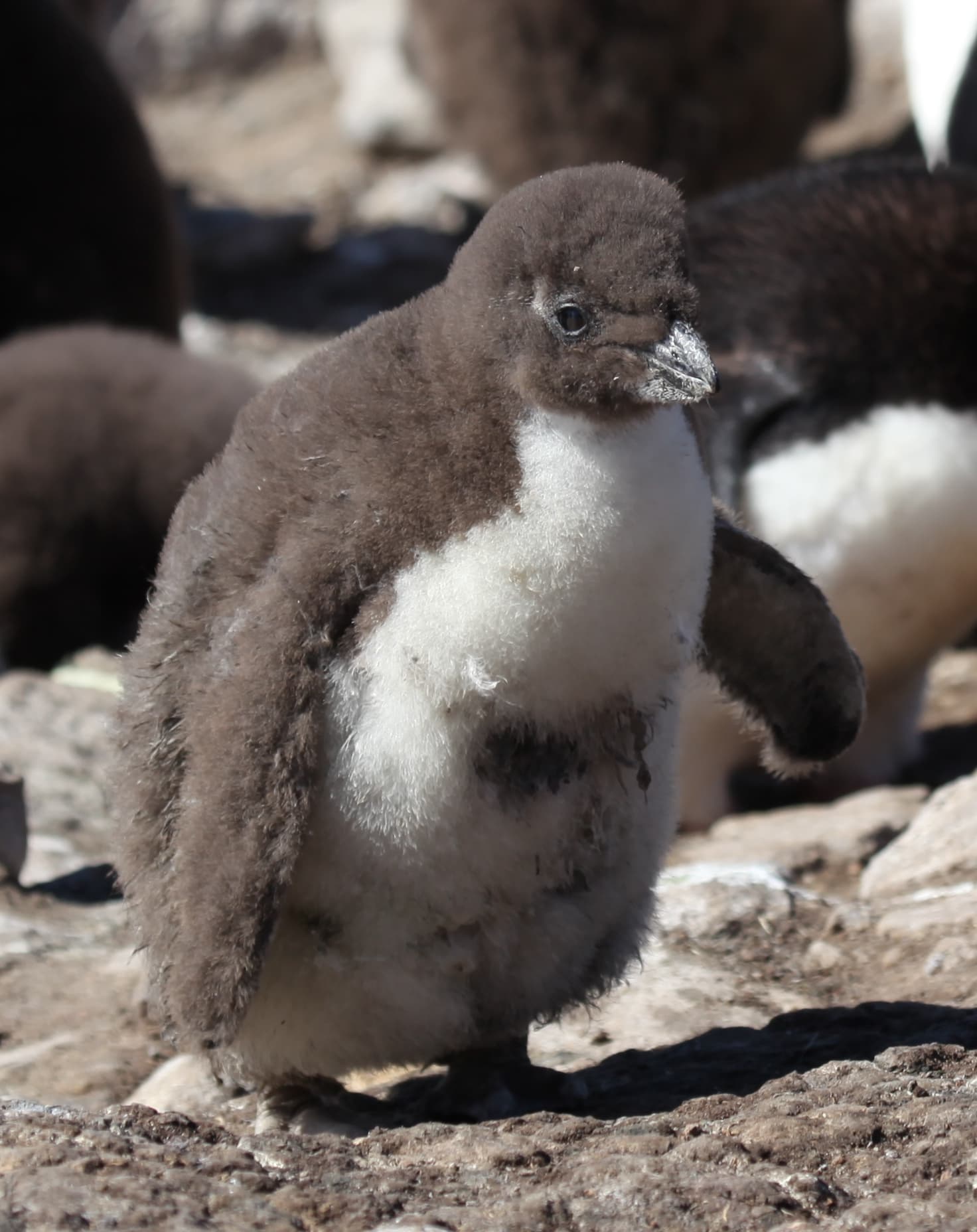
Chick Appearance
Backside, face and flippers are dark brown, while belly is white. Beak is black, eyes are greyish-brown and feet are pale pink, while soles are dark
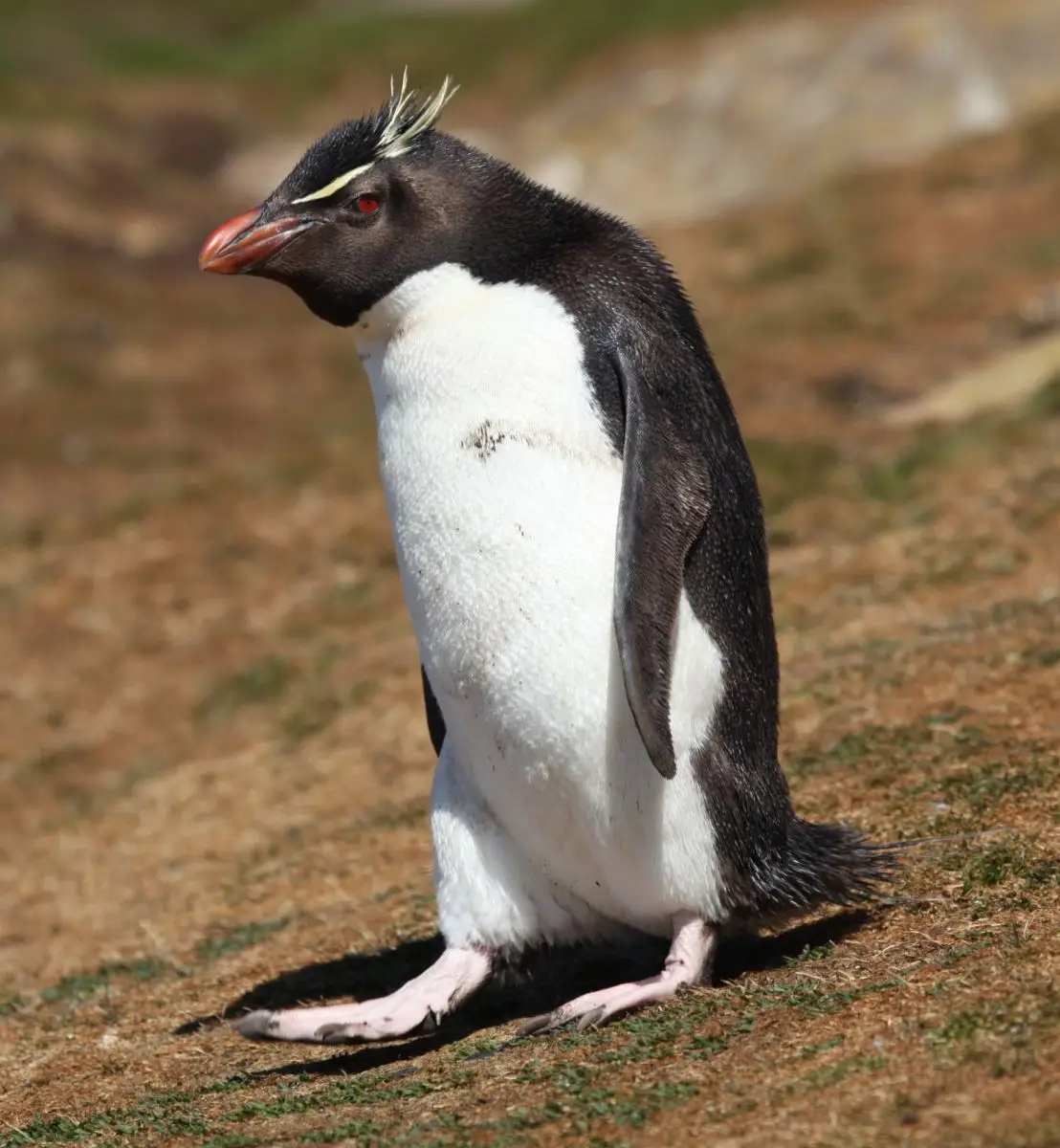
Adult Appearance
Black plumage on face, backside and flippers, with white plumage on belly. Thin yellow stripes run backwards from each eye, making up the crest. The beak is red-orange in colour, feet are pale pink and eyes are red. They are easy to differentiate from northern rockhopper penguins due to their crest
Fun Fact
These penguins spend months living in the open ocean before returning to land to breed!