Penguin Species Profile
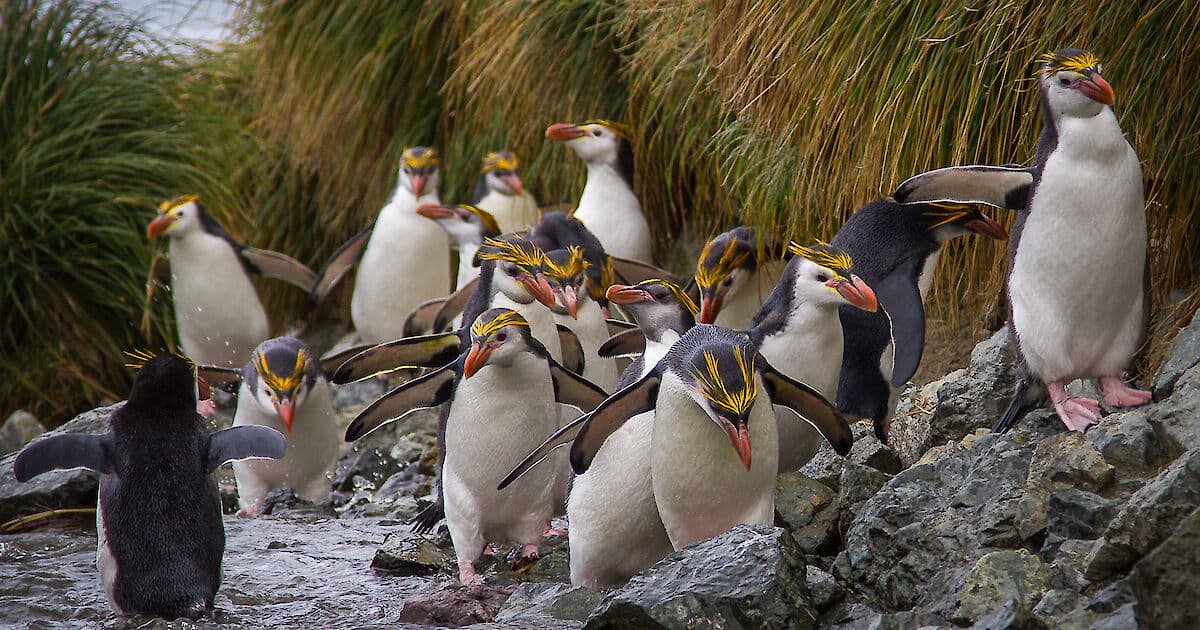
Royal Penguin
Eudyptes schlegeli
A distinctive crested penguin known for its white face and Macquarie Island breeding colonies.

Conservation Status
Near Threatened

Population Trend
Stable
Species Facts
Essential profile data
Scientific name
Eudyptes schlegeli
Name origin
These penguins are referred to as ‘royal’ due to their distinctive yellow crest plumes.
Estimated population
850,000 breeding pairs
Colony size
60-500,000 breeding pairs
Average lifespan
15-20 years
Weight range
3-8kg
Maximum height
76cm
Diet
Euphasiid crustaceans, fish and squid
Predators
Leopard seals, fur seals, orcas, skuas, giant petrels. Southern elephant seals sometimes attack but never pray on royal penguins.
Adaptations
They use a mix of unique chirps, barks, and trills to identify their mates and chicks amid their dense colonies.
Geographic breeding range
Macquarie Island and Bishop Island
Appearance
Chick and adult comparison
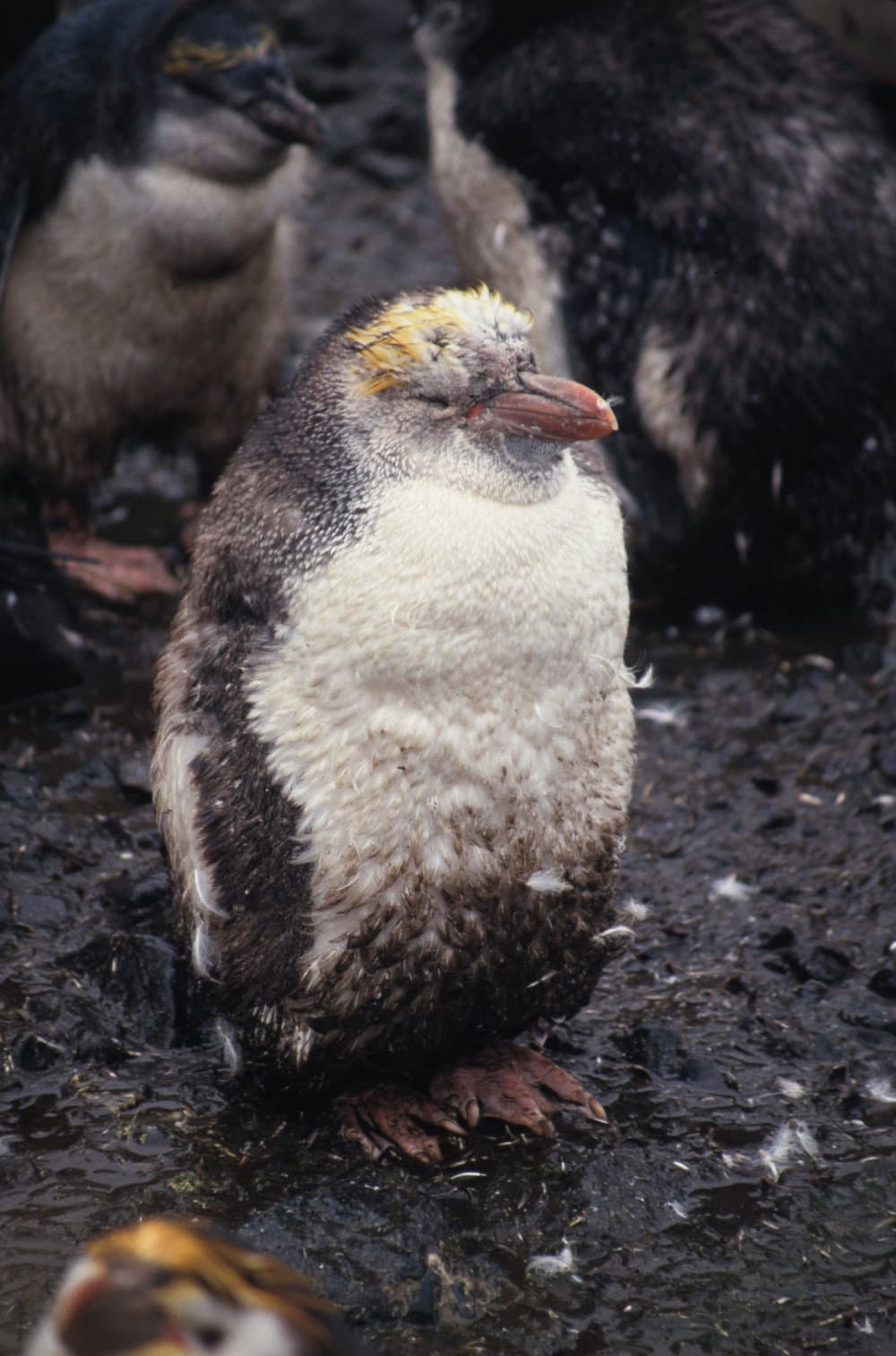
Chick Appearance
Brownish-grey plumage covering face, flippers and backside. Belly is white, feet are pale pink, beak is black and eyes are grey.
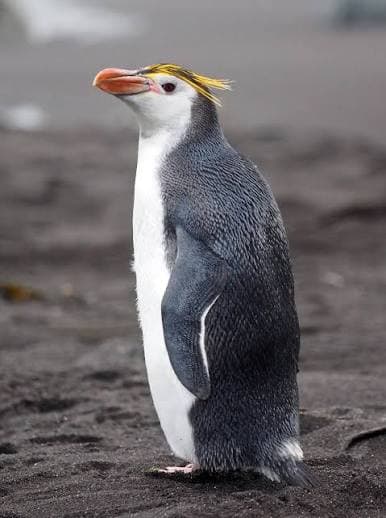
Adult Appearance
Vivid yellow crest beginning right in the middle of the space between the eyes. Beak is a deep orange. Feet remain pale pink, while eyes shift to dark red once adulthood is reached. Face and belly are white, while the backside and flippers are black.
Fun Fact
Unlike most birds that derive yellow pigmentation from carotenoid in their diet, royal penguins naturally produce a vibrant yellow pigment called spheniscin in their bodies. The brightness of this crest expresses health and energy to potential mates.