Penguin Species Profile
Macaroni Penguin
Eudyptes chrysolphus
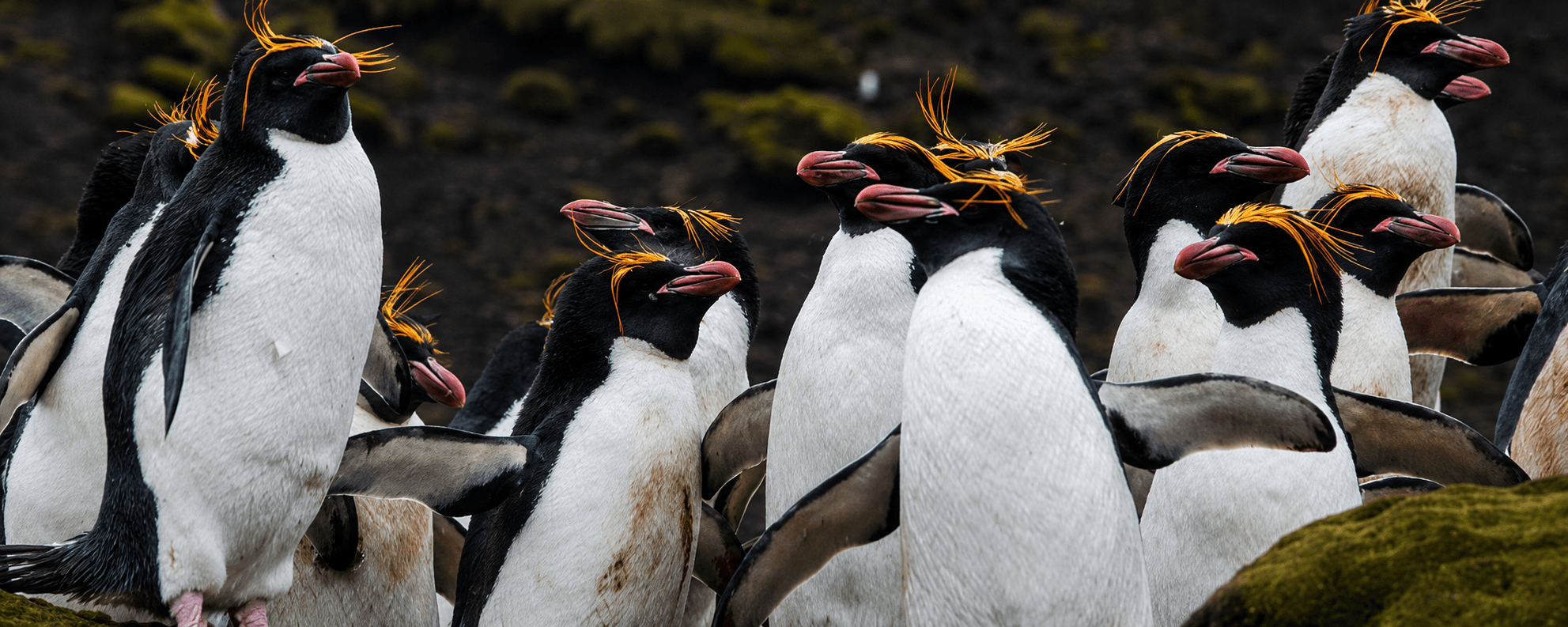
Well known for its distinctive yellow crest

Conservation Status
Vulnerable

Population Trend
Decreasing
Species Facts
Essential profile data
Scientific name
Eudyptes chrysolphus
Name origin
Discoverers of these penguins referred to them as ‘macaronis’ because their crests looked like the yellow tassels on men's hats (they were also called macaronis)
Estimated population
6.3M breeding pairs
Colony size
Approx. 1-2.2M
Average lifespan
8-15 years
Weight range
3.1-5kg
Maximum height
71cm
Diet
Crustaceans, myctophid fish, amphipods, and cephalopods
Predators
Leopard seals, fur seals, orcas and sharks
Adaptations
Solid bones to help them dive deep (birds that can fly have hollow bones, but they cannot dive deep into water due to this). Although they are flightless, their flippers allow them to ‘fly’ (propel) through the water
Geographic breeding range
Antarctic Peninsula; Bouvet, South Georgia and Heard Island, Chile coast, and McDonald, Crozet, Falkland, Kerguelen, Prince Edward, South Sandwich and South Orkney Islands
Appearance
Chick and adult comparison
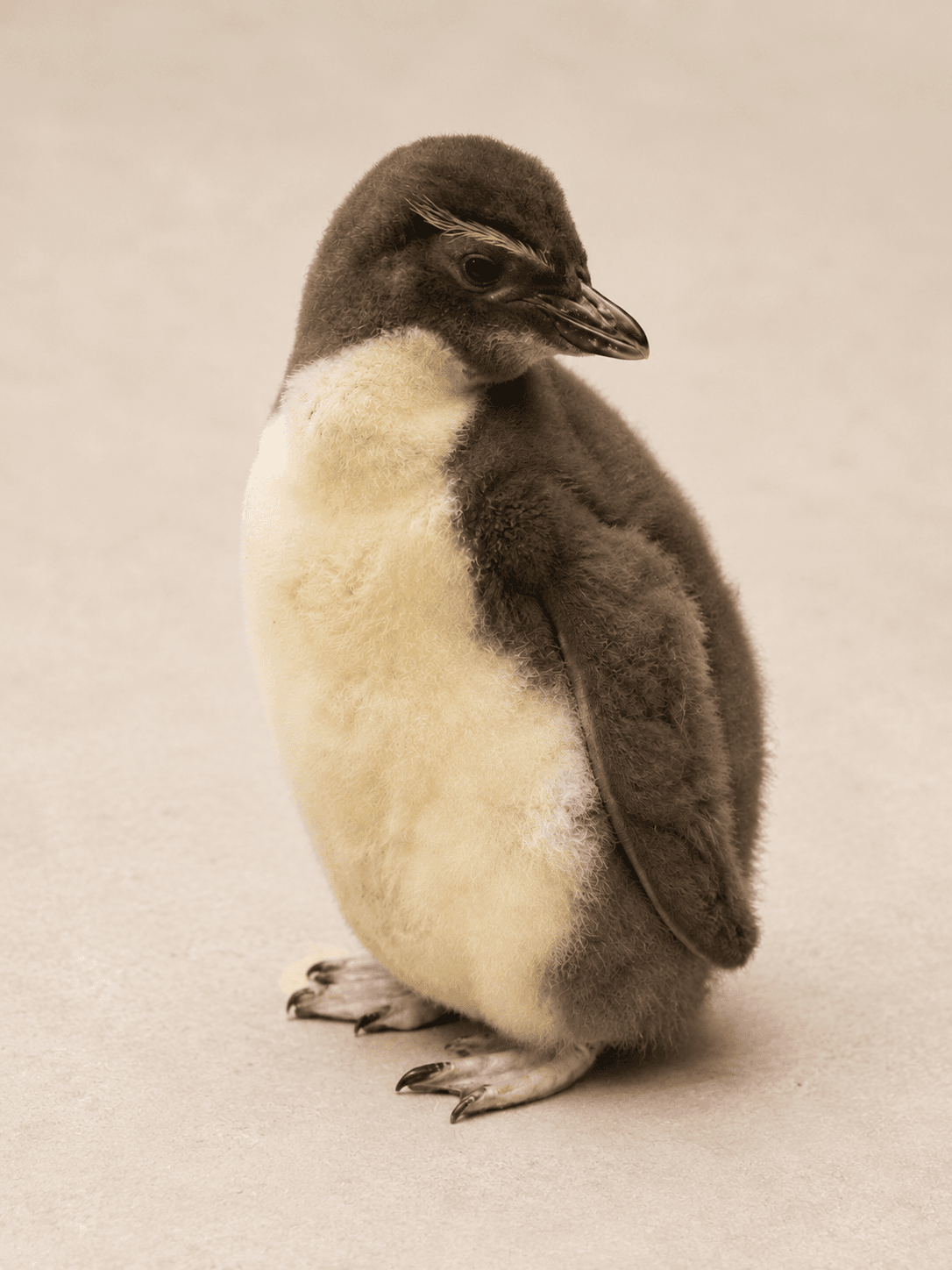
Chick Appearance
Dark brown plumage on the head, face, backside and flippers, with white plumage on the belly. Feet are pale pink while beak is black, and eyes are dark brown.
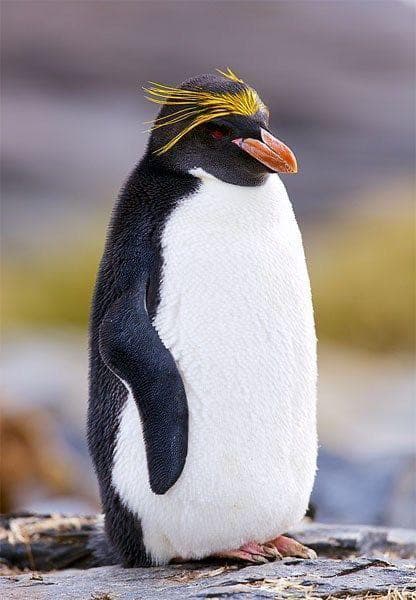
Adult Appearance
Long plumes of yellow feathers that fan out above their dark red eyes with black plumage on backside of body, face and flippers, with white plumage on belly. Feet are pale pink and beak is bright red-orange.
Fun Fact
The scientific name for macaroni penguins (Eudyptes chrysolphus) means ‘good diver’ and ‘golden crest'