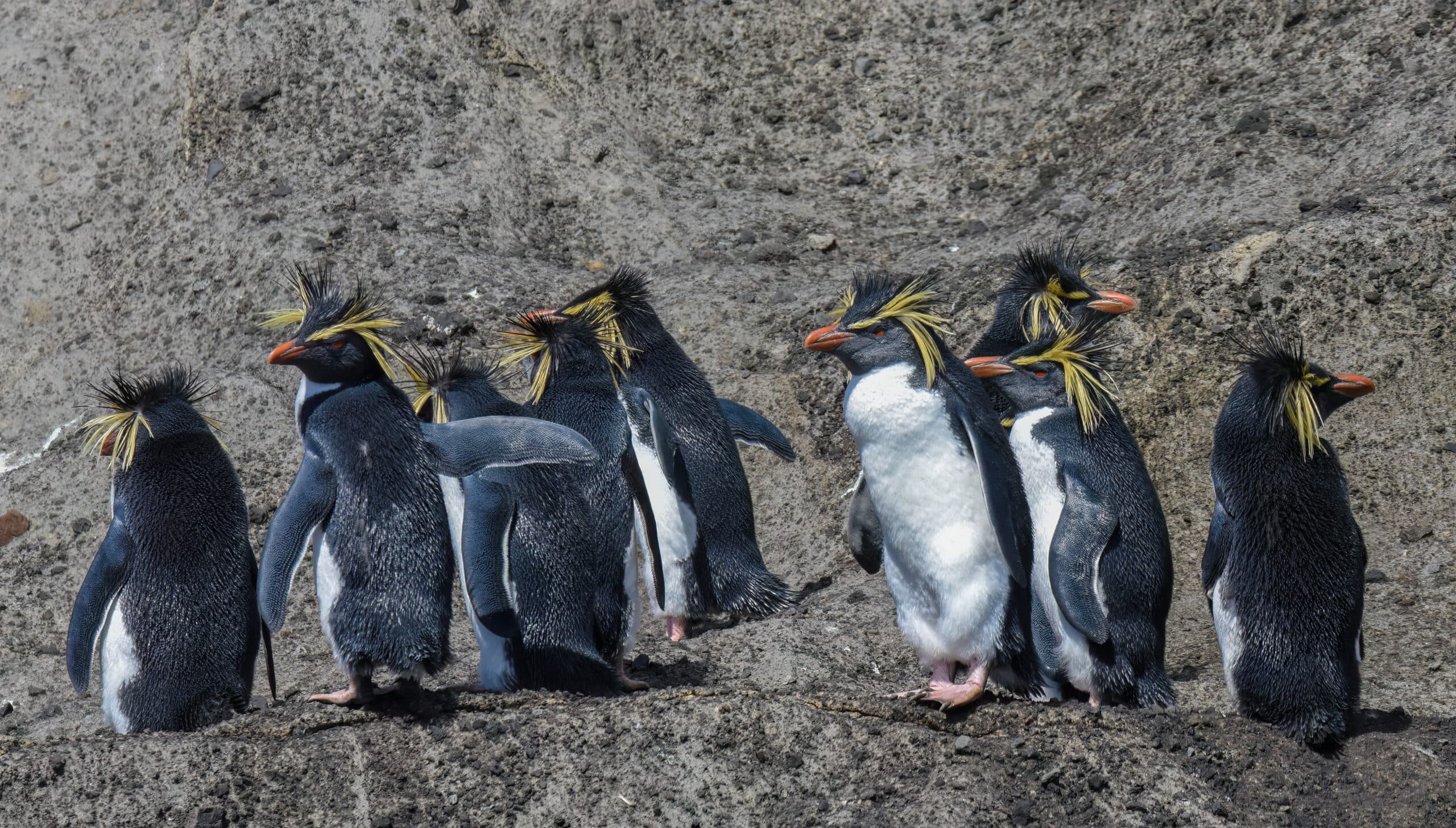
Penguin Species Profile
Northern Rockhopper Penguin
Eudyptes moseleyi
Well known for their distinctive ability to 'hop' over rocks

Conservation Status
Endangered

Population Trend
Decreasing
Species Facts
Essential profile data
Scientific name
Eudyptes moseleyi
Name origin
Named due to its unique behaviour of hopping over rocks.
Estimated population
240,000-250,000 breeding pairs
Colony size
6500-48,500 breeding pairs
Average lifespan
9-10 years
Weight range
2.5-4.5kg
Maximum height
60cm
Diet
Crustaceans, fish, cephalopods
Predators
Subantarctic fur seals, leopard seals, orcas (killer whales), blue sharks, subantarctic skuas, giant petrels, kelp gulls and Tristan thrushes.
Adaptations
Large, strong feet which allow them to grasp slippery rocks and jump over them.
Geographic breeding range
French Southern Territories; Saint Helena, Ascension and Tristan da Cunha; Falkland Islands (rare)
Appearance
Chick and adult comparison
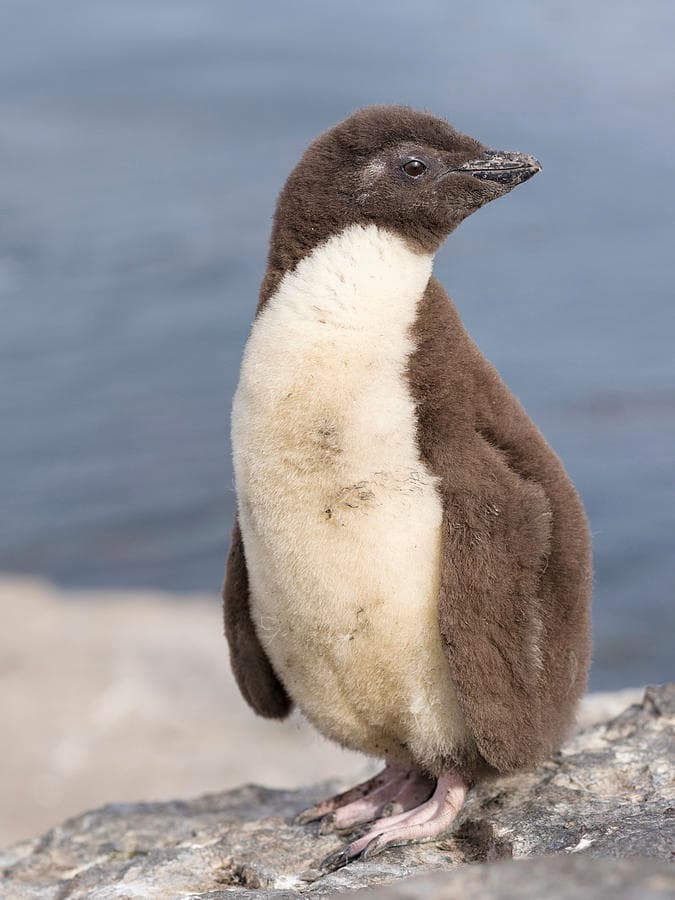
Chick Appearance
Soft, brown plumage covering backside and face. Belly has white plumage. Feet are pale pink, and beak is black. Eyes are blackish-brown.
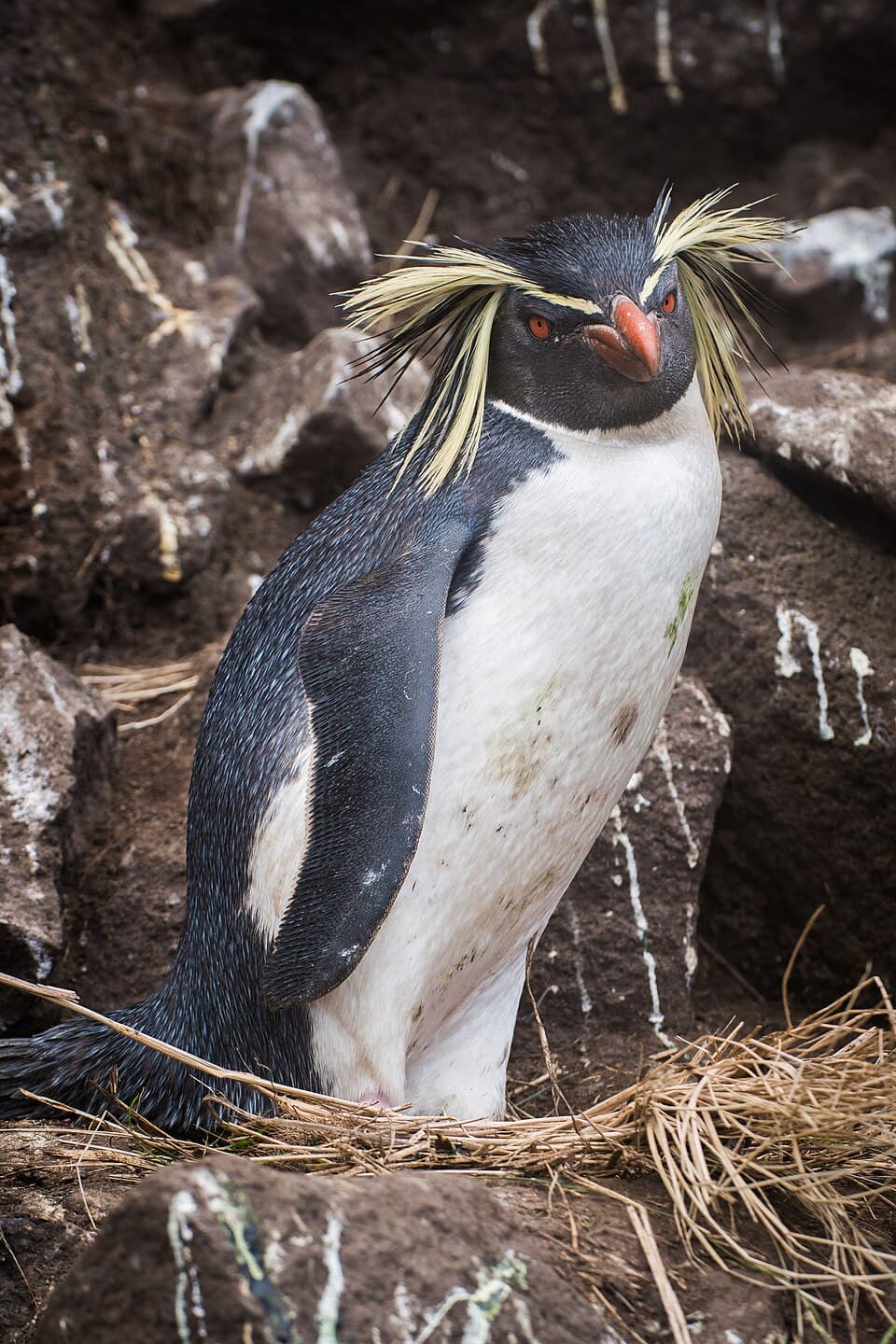
Adult Appearance
Very long yellow plumes on each side of the face, starting above the bill on both sides (this makes up the crest). Flippers, face and backside have black feathers, while the belly has white plumage. Beak is a deep orange. Feet are pale pink, and eyes are blood-red.
Fun Fact
After the breeding season, these penguins spend months swimming at sea continuously, covering >2 million square kilometres.