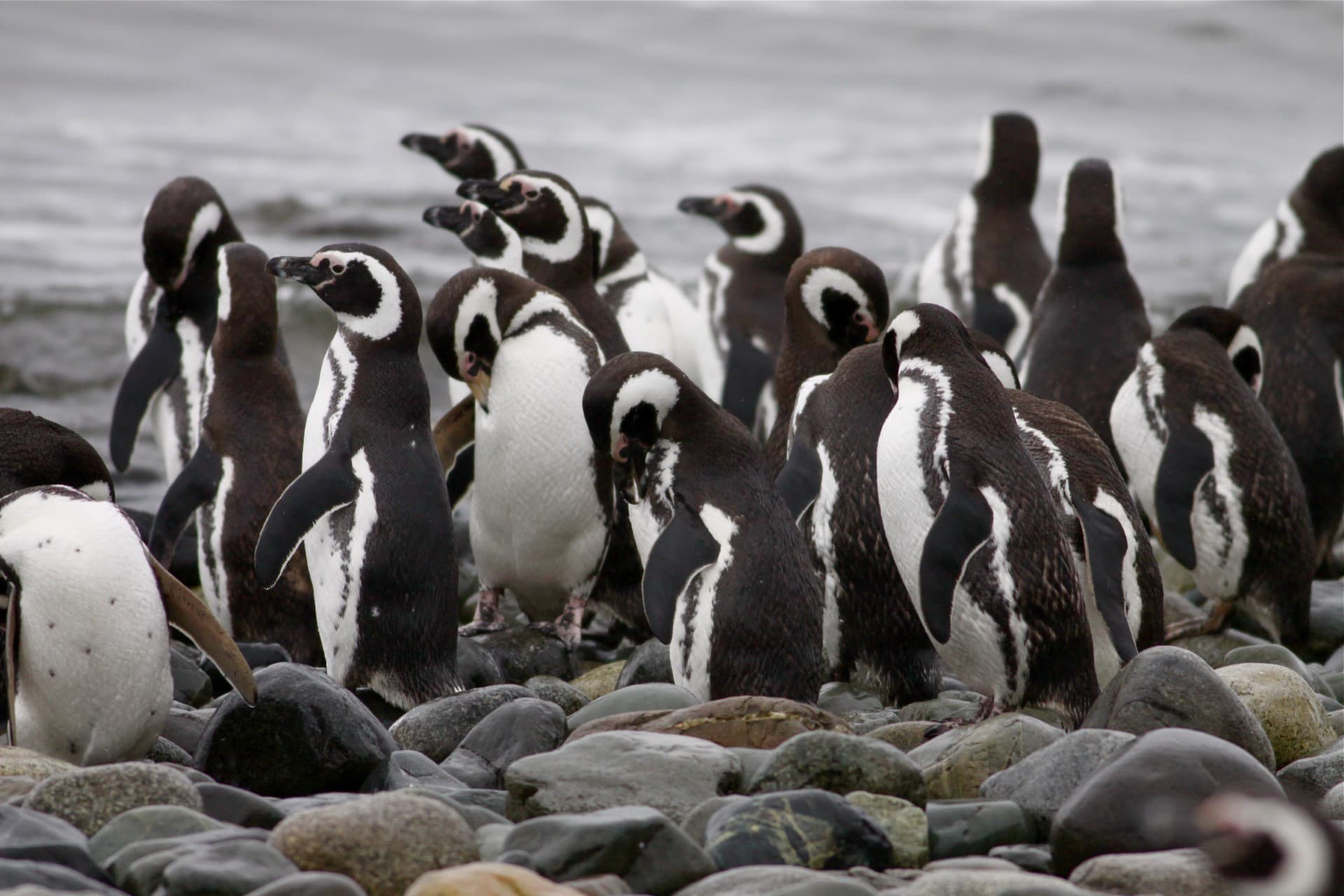
Penguin Species Profile
Magellanic Penguin
Spheniscus magellanicus
Well known for their long-distace migrations

Conservation Status
Near Threatened

Population Trend
Decreasing
Species Facts
Essential profile data
Scientific name
Spheniscus magellanicus
Name origin
The famous Portugeuse explorer Ferdinand Magellan discovered these penguins
Estimated population
1.1 - 1.6M breeding pairs
Colony size
4000-200,000 breeding pairs
Average lifespan
10-25 years
Weight range
3.2-4.6kg
Maximum height
75cm
Diet
Small pelagic fish, squid, cephlapods and crustaceans
Predators
Orcas, leopard seals, South American sea lions, land predators like skuas, giant petrels and gulls, and introduced land predators like pumas and foxes
Adaptations
Dense plumage (up to 300 feathers per square inch) to stay completely waterproof and insulated
Geographic breeding range
Brazil, Peru, Uruguay, Falkland Islands, Argentina and Chile
Appearance
Chick and adult comparison
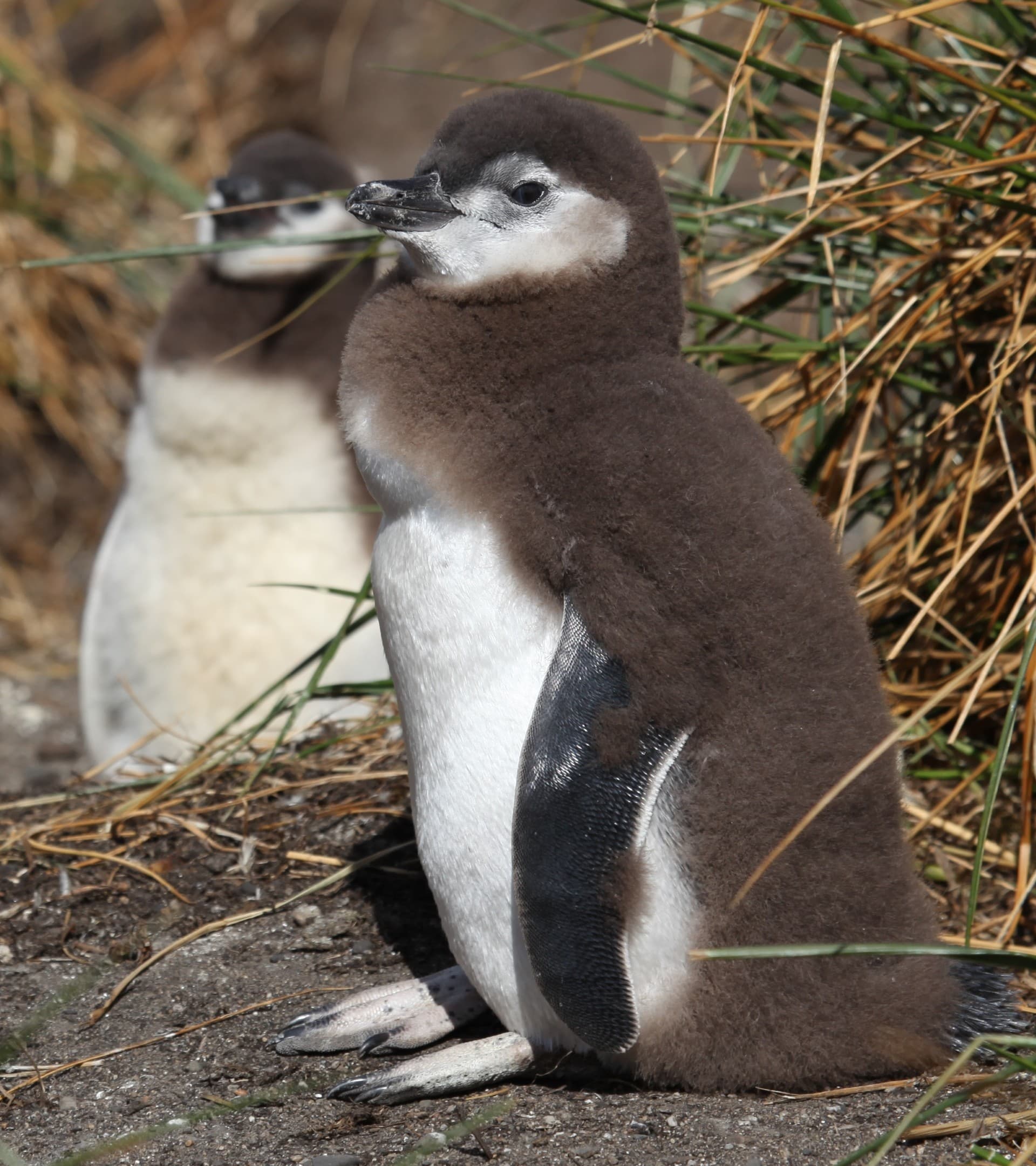
Chick Appearance
Soft, brown plumage covering backside. Belly, and face are white, while flippers are black. Beak is black, feet are pale pink, and eyes are dark brown.
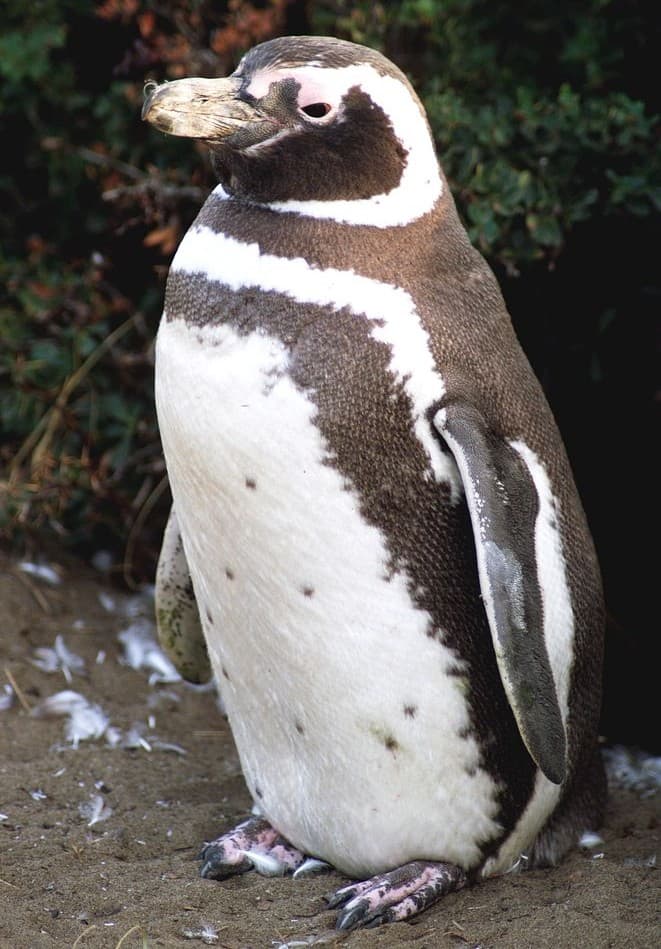
Adult Appearance
Backside is black. Belly is white with a thick black band on it. Face is black with ‘ring’ of white plumage surrounding it. Pink glands are visible around reddish-brown eyes. Plumage behind flippers are white, while the flippers themselves are black. Feet black with pale pink blotches. Beak is black with a grey tip.
Fun Fact
These penguins dig deep dirt burrows for nesting and protection from the harsh temperatures and weather