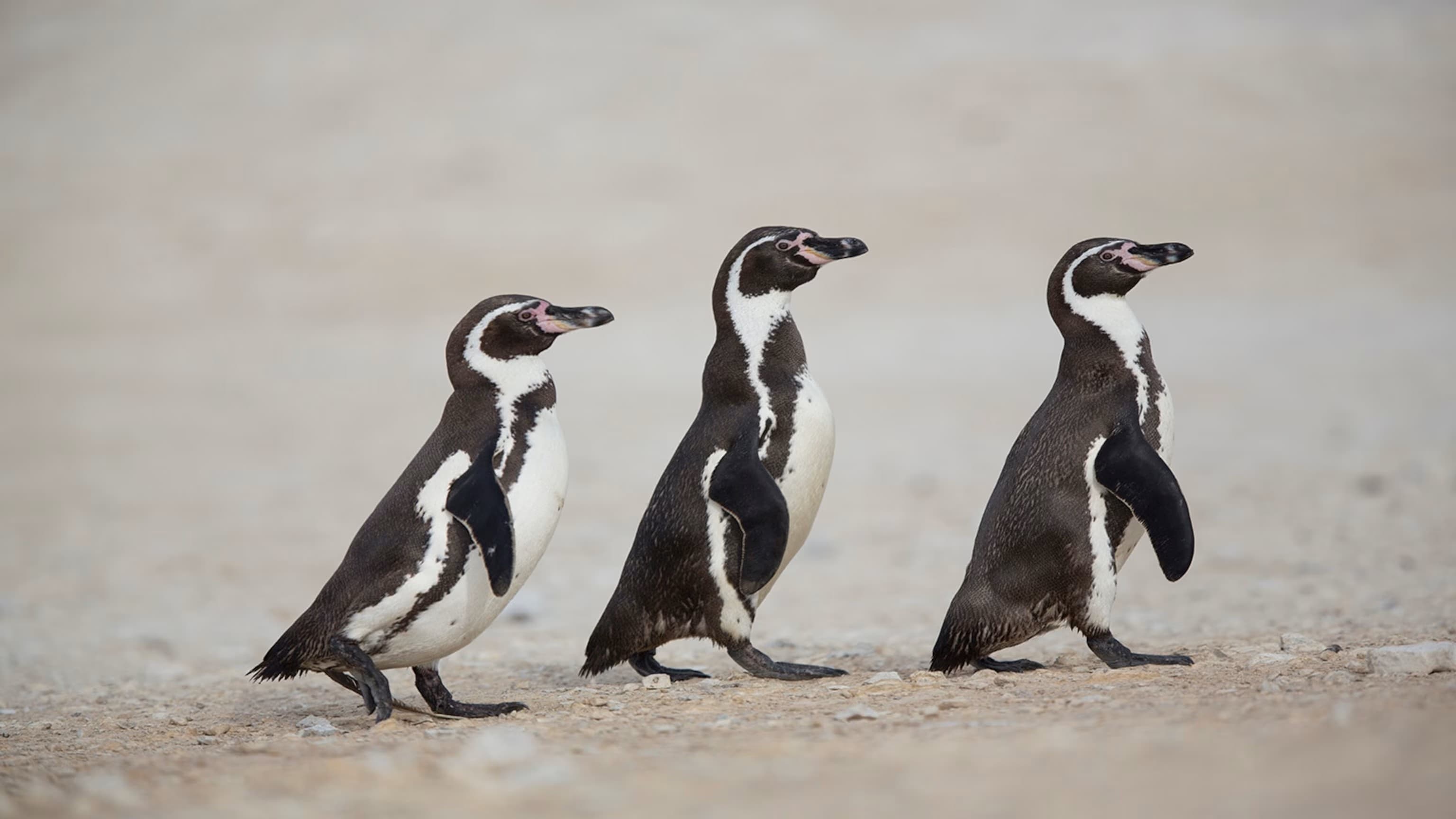
Penguin Species Profile
Humboldt Penguin
Spheniscus humboldti
A penguin known for its life by the Humboldt current, and adaptation to a cooler climate

Conservation Status
Vulnerable

Population Trend
Decreasing
Species Facts
Essential profile data
Scientific name
Spheniscus humboldti
Name origin
Humboldt penguins are situated near the cold-water Humbolt Current
Estimated population
5,000-20,000 breeding pairs
Colony size
12,000-20,000 breeding pairs
Average lifespan
15-20 years
Weight range
4.2-5kg
Maximum height
72cm
Diet
Peruvian anchovies, squid and small crustaceans
Predators
Orcas, Leopard Seals, Giant petrels, skuas, sharks, sea lions, fur seals, foxes, feral cats and dogs, rodents and snakes.
Adaptations
Torpedo shaped body for good swimming and burrowing to protect themselves and their chicks from the sun.
Geographic breeding range
Chile and Peru
Appearance
Chick and adult comparison
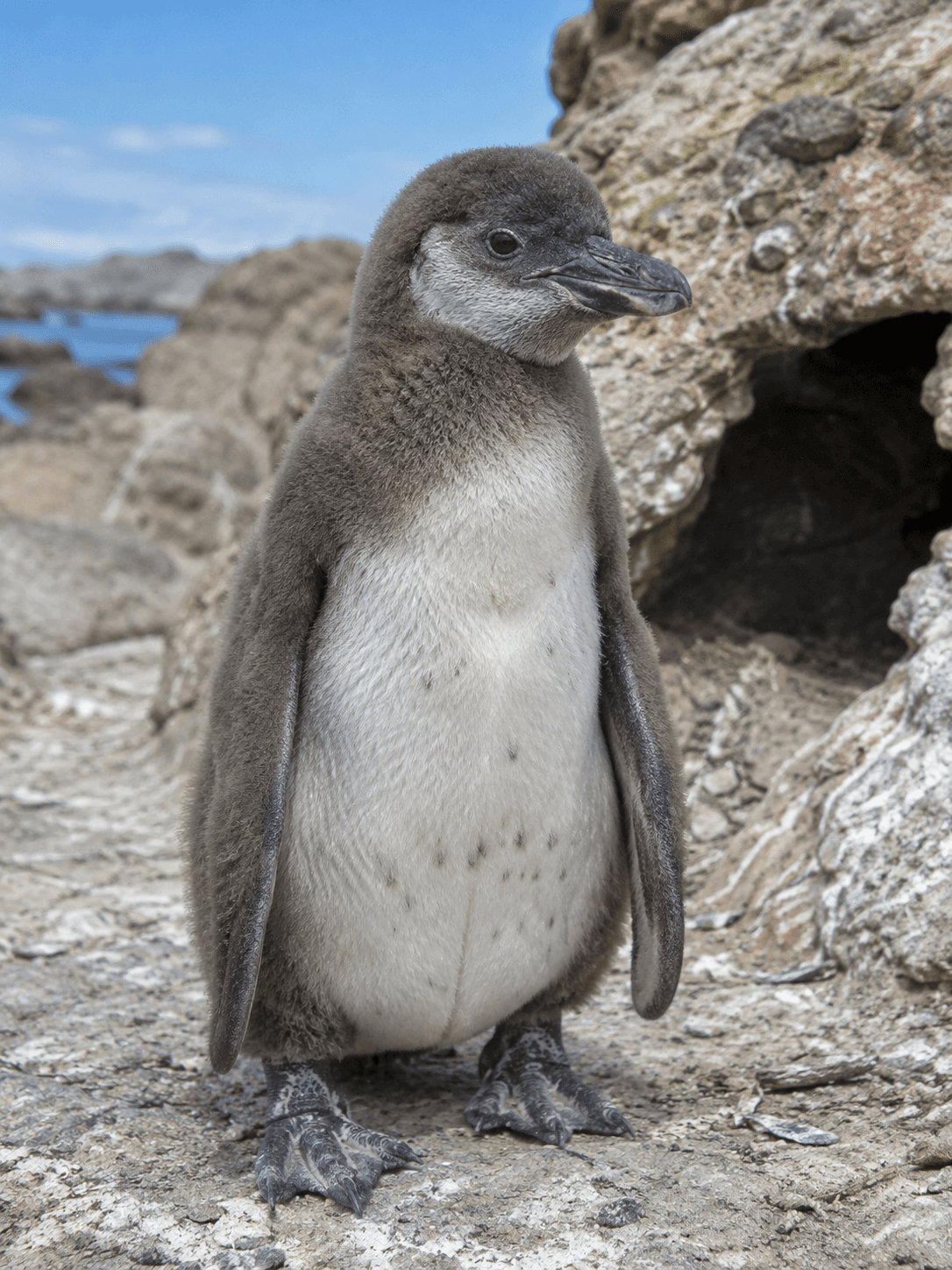
Chick Appearance
Dark brown plumage on the head, face, backside of the body and flippers, with light brown plumage on the belly. Beak is black, feet are pinkish-brown and eyes are reddish-brown.
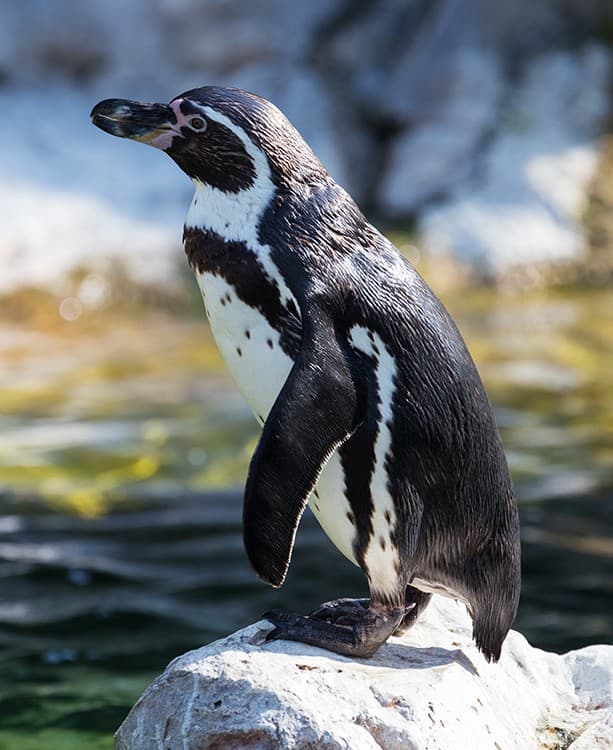
Adult Appearance
Black plumage on backside of the body, back of head and backside of flippers with white plumage on belly. Belly has a unique pattern, with an upside down U-shape of black plumage. Cresent shapes of white plumage run from sides of the eyes to the neck, connecting with the white plumage on the belly. Feet are pale pink with big patches of black, and inside of flippers have white plumage.
Fun Fact
The speckled black and white pattern on Humboldt penguins’ chests are unique as fingerprints!