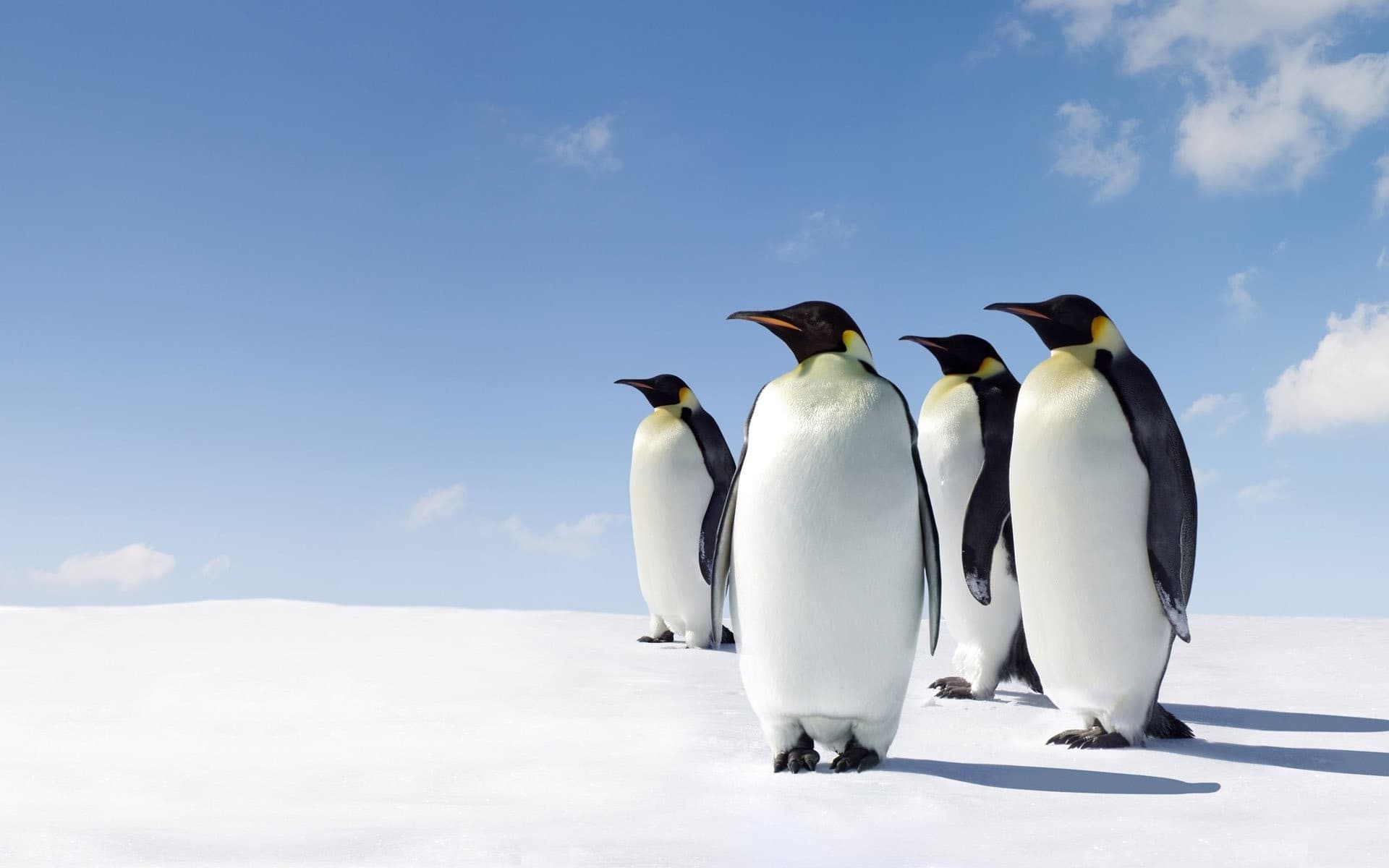
Penguin Species Profile
Emperor Penguin
Aptenodytes fersteri
The largest of all penguins, well known for its size and appearance.

Conservation Status
Endangered

Population Trend
Decreasing
Species Facts
Essential profile data
Scientific name
Aptenodytes fersteri
Name origin
These tall penguins are referred to as ‘emperors’ because of their height, size and regal look
Estimated population
120,000+ breeding pairs
Colony size
100-20,000+ breeding pairs
Average lifespan
15-20 years
Weight range
32-40kg
Maximum height
120cm
Diet
Antarctic Silverfish, more fish varieties, cephalopods, krill and squid
Predators
Leopard seals, orcas
Adaptations
Solid bones to prevent injuries or death from deep, high-pressure waters when diving for food
Geographic breeding range
Coastal Antarctica
Appearance
Chick and adult comparison
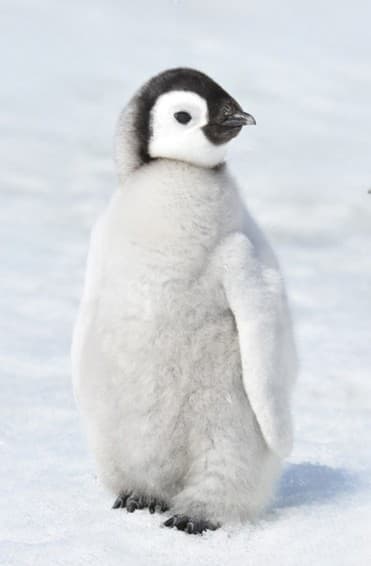
Chick Appearance
Silver plumage on the backside, belly and flippers, with black and white plumage on the face. Eyes, beak and feet are black. With developing bodies, chick feathers don’t have insulative properties, hence chicks rely on their parents’ warmth by huddling with them. Chicks will start to molt when insulative, adult feathers begin to form under chick feathers.
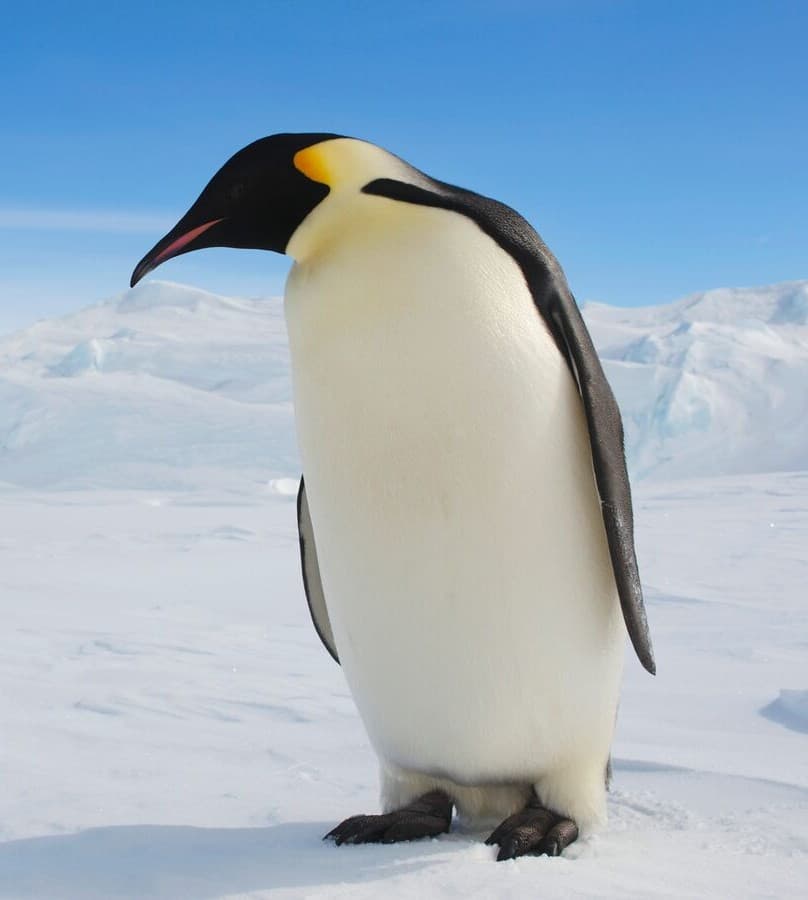
Adult Appearance
Black plumage on the face, flippers backside, and white plumage on the belly. Yellow plumage blends in with white plumage on the sides of the neck, and between the front of the neck and the belly. Their feet are also black. Their black beaks have a salient red or orange strike on them. Eyes are dark brown.
An Interesting Story
One day in early November 2024, an Emperor penguin was sighted on Ocean Beach in Denmark, Western Australia. The male penguin was named Gus, after the Roman emperor Augustus. Scientists were stunned as to how Gus travelled so far north from Antarctica. When he arrived he weighed just 23kg and had a protruding backbone, showing severe malnourishment. Seabird rehabilitator Carol Biddulph took him in and nursed him back to health. She kept him cool with constant cold-water showers to prevent hyperthermia and fed him three times a day. After around three weeks he regained a healthy body condition and was released into the Southern Ocean off the southern coast of Western Australia by a Parks and Wildlife Service vessel.
Fun Fact
Emperor penguins are the deepest diving seabird, able to reach depths of greater than 500m. They can stay underwater and hold their breath for over 30 minutes!